


“We have enough staff and vehicles, so why are our deliveries still falling behind? ” This is a common question fleet and business owners often ask.
When delivery operations start to lag, many companies react intuitively by buying more vehicles or hiring extra drivers. But more often than not, the issue isn’t a lack of resources—it’s hidden friction across the workflow. Unnecessary detours, long waiting times, and rigid scheduling quietly eat away at your profit margins and on-time performance.
Throwing money at systemic problems rarely works. To fix delivery inefficiency, you first have to pinpoint where things are breaking down. In this article, we’ll look at the warning signs of a struggling fleet, diagnose the 4 biggest delivery bottlenecks, and show you how AI-driven route optimization can turn your fleet into a competitive advantage.
Warning Signs That Your Delivery Efficiency Is Suffering
Whether you manage a fleet in logistics, retail, field services, or manufacturing, operational pressure is higher than ever. If your team is dealing with any of the following issues, adding more vehicles or hiring more drivers won’t solve the problem—your workflow needs a fix:
- Mornings wasted on administrative tasks: Dispatchers spend hours every morning juggling whiteboards or spreadsheets, while drivers waste time confirming routes, load details, and multi-stop orders.
- Inability to handle traffic disruptions: City traffic is unpredictable—especially during rush hour, sudden rainstorms, or road accidents. Without real-time updates or alternative routes, one small roadblock can throw off a driver’s entire day.
- Customer service completely out of the loop: When customers call for delivery updates or ETAs, support teams can’t give a straight answer because they lack real-time visibility into driver locations.
- High deadhead rates (empty trucks returning to base): Trucks often finish their drop-offs early in the day and spend the afternoon driving back empty. Gas and toll costs add up, yet dispatchers can’t assign nearby pickups or handle returns on the way back.
- Heavy reliance on paper receipts: Drivers turn in paper proof-of-delivery receipts at the end of the day—or even the next morning—leaving management in the dark about order status until hours later.
What’s Really Delaying Your Deliveries? 4 Major Logistics Bottlenecks
To improve delivery efficiency, you need to diagnose your operational workflow. In most commercial fleets, chronic delays usually come down to four main issues:
1. Planning by Memory, Not Math
Relying on experienced dispatchers to organize routes using whiteboards or spreadsheets works fine for five vehicles, but fails when scaling. When managing dozens of trucks, hundreds of drop-off points, strict delivery time windows, vehicle weight limits, and urban access restrictions, it is impossible to calculate optimal routes manually in a reasonable amount of time.
2. Static Schedules in a Dynamic World
Traditional dispatching assumes the day will go exactly as planned. But once drivers encounter severe traffic jams, sudden monsoon downpours, or emergency orders pop up. Without automated re-routing tools, a static morning plan becomes obsolete within hours, turning minor road hiccups into compounding, day-long delays.
3. Blind Spots Between Field and Back Office
When back-office systems don’t sync with driver mobile devices, field operations become a black box. Dispatchers lose track of real-time driver locations and remaining cargo capacity, missing easy opportunities to assign nearby pickups to returning vehicles. Meanwhile, drivers remain unaware when customers update delivery addresses or cancel orders, leading to wasted trips.
4. Zero Operational Measurement
As management legend Peter Drucker famously said, “If you can’t measure it, you can’t manage it.” Many fleet managers know their operations are inefficient, but because key metrics—like idle time, route deviations, and loading delays—aren’t tracked in real time and in one place, they have no data to prove where profits are leaking. Without visibility, improvement is just guesswork.
How AI Route Optimization Solves Delivery Bottlenecks
To eliminate these roadblocks, fleet operators need to shift from manual guesswork to AI-driven decisions. The fastest way to improve delivery efficiency today is leveraging smart automation across your daily operations:
1. AI-Powered Route Planning
Smart route planning ensures every vehicle takes the fastest, most practical path while adapting to real-world variables in real time. AI algorithms instantly crunch multiple constraints at once:
- Automated Multi-Vehicle Assignment: Automatically divides stop lists among available vehicles based on capacity, preventing overlapping routes in the same neighborhood.
- Strict Time-Window Compliance: Ensures vehicles arrive within customer-requested delivery time slots.
- Real-Time Traffic Adaptability: Factors in live traffic and historical road trends to steer clear of congestion, while adapting on the fly to sudden address changes or bad weather.
Meet Master Planner
Master Planner is an AI-powered route optimization tool built on the processing power of the Google Maps Routes API. It cuts hours of manual scheduling down to just a few minutes. The system automatically factors in vehicle volume space, weight limits, and driver shift hours—making it easy to adapt to last-minute order changes while reducing total mileage, fuel costs, and carbon emissions.

2. Dynamic Re-Routing & Last Mile Tracking
When road conditions change or high-priority orders come in, modern systems automatically recalculate routes on the fly. The system detects each vehicle’s real-time location and remaining space, inserting new pickup tasks into a driver’s schedule without disrupting their existing deliveries. This level of flexibility is key to cutting down empty miles and keeping operations nimble.
Flexible Scheduling with Master Planner
Powered by the Google Maps Platform Route Optimization API (GMPRO), Master Planner goes beyond initial route planning to support dynamic, on-the-go adjustments. Paired with MasterPulse—a unified fleet tracking and trip management system—dispatchers get real-time visibility into driver routes and can assign urgent tasks to the nearest available vehicle with a single click.
3. Digital Work Orders & Seamless Communication
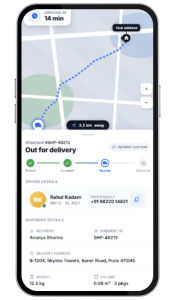
To bridge the gap between dispatchers and drivers, daily itineraries need to sync straight to mobile devices. Drivers simply open an app (like Master Planner) to view their daily stops, turn-by-turn navigation, and special customer instructions (e.g., leave with front desk, use loading dock B, or collect signature upon arrival).
When customers call with questions, support teams can instantly check driver locations, live delivery progress, and estimated arrival times (ETAs) to give immediate updates. Drivers can also capture photo proof and digital signatures on their phones, syncing completion status back to the office in real time—eliminating paper receipts entirely.
4. Data-Driven Analytics for Continuous Improvement
Achieving long-term delivery efficiency requires clear operational data. When managers can quickly spot which routes offer the lowest return, see whether drivers are deviating from planned paths, or track long loading waits, operations become completely transparent—making it easy to fix bottlenecks immediately.
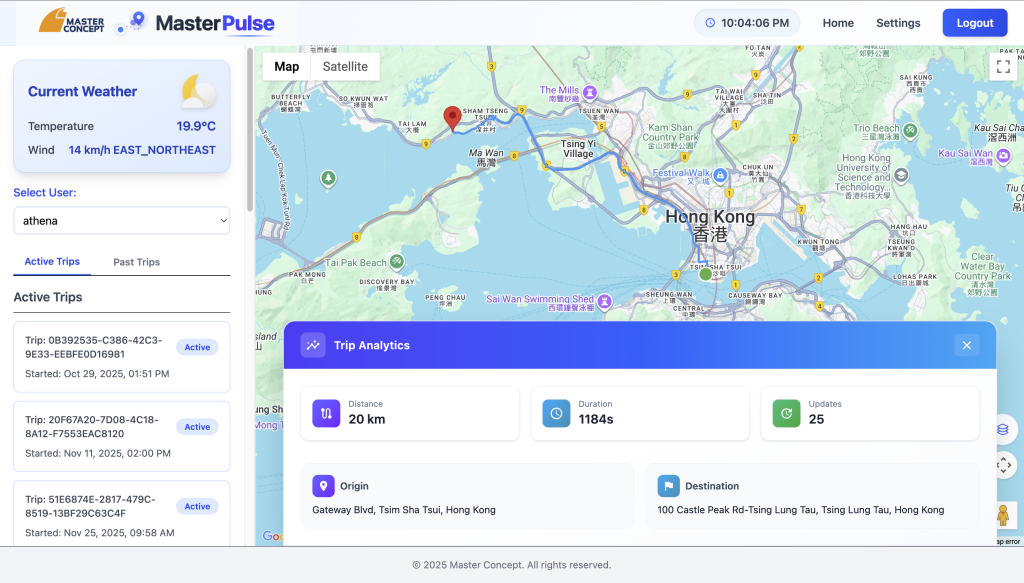
Think of MasterPulse as your fleet’s operational recorder. Beyond tracking live navigation, it automatically translates trip distances, actual drive times, and on-time rates into intuitive dashboard analytics—giving you the insights you need to refine your operations over time.
Turn Fleet Efficiency into Your Greatest Competitive Edge
Finding out why your deliveries are falling behind is a great first step, but real transformation happens when you put the right tools to work. When you combine smart route optimization, real-time visibility, and clear data analytics into one seamless workflow, operational efficiency stops relying on veteran dispatchers and guesswork. Instead, it becomes a scalable, repeatable system that grows with your business.
Ready to fix your delivery bottlenecks once and for all?
At Master Concept, we help commercial fleets turn daily logistics friction into a real competitive advantage. With Master Planner and MasterPulse, we empower companies to instantly improve their delivery efficiency and gain complete visual control over every trip.
Reach out to our team today for a free consultation and schedule your personalized demo!
Frequently Asked Questions (FAQs)
1. How do I solve slow delivery problems in my business?
Start by identifying where your delays are happening. Most slow deliveries aren’t caused by a lack of drivers, but by manual route planning, excessive vehicle idle time, and static scheduling. Switching from paper-based planning to AI-powered route optimization can cut dispatch time down to minutes and eliminate unnecessary driver detours.
2. What are the main causes of delivery inefficiency?
The four biggest causes of delivery delays are:
- Manual route planning: Human error and slow calculations.
- Traffic and weather disruptions: Inability to adjust routes on the fly.
- Poor communication: Disconnects between drivers, dispatchers, and customers.
- Lack of real-time data: Not knowing where vehicles are or how long stops take.
3. How can route optimization software improve delivery speed?
Route optimization software like Master Planner automatically calculates the fastest, most cost-effective paths for your drivers in seconds. It factors in live traffic, delivery time windows, vehicle load limits, and customer locations at once, helping your fleet complete more drop-offs per day with fewer miles driven.
4. How do I handle last-minute order changes or sudden traffic jams?
The best way is through dynamic dispatching. Modern fleet software tracks your vehicles in real time and automatically recalculates routes on the fly. For example, if traffic backs up or an urgent order comes in, Master Planner instantly assigns the task to the nearest available driver to ensure the shortest delivery time.
5. How do I reduce delivery costs without cutting staff or vehicles?
Focus on eliminating hidden operational friction. By using real-time driver tracking and AI route planning, you can significantly reduce fuel consumption, avoid empty returns (deadheading), shorten customer waiting times, and minimize costly overtime hours.



![[Free Webinar] Road to COP17: Unifying Enterprise Data with Planetary-Scale Geospatial AI](https://masterconcept.ai/wp-content/uploads/2026/09/Webinar-261007-Unifying-Enterprise-Data-with-Planetary-Scale-Geospatial-AI-_1280x720px-scaled.png)