


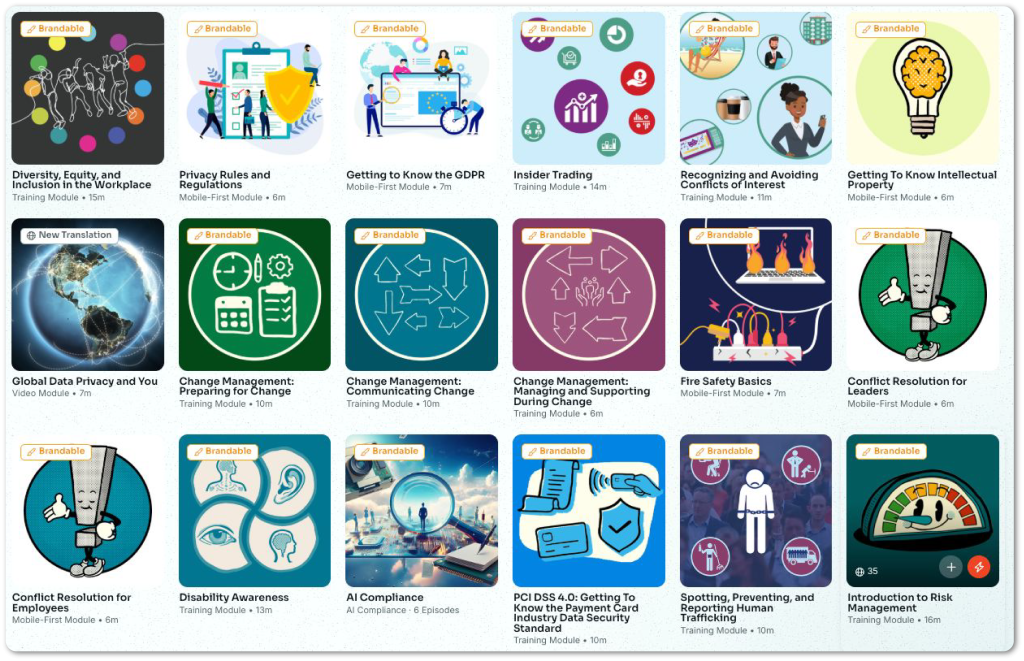
Security Awareness Training for the Age of AI
Phishing attacks, social engineering, and AI generated threats continue to target employees across modern organisations.
KnowBe4 helps organisations build a continuous security awareness training program that reduces human risk through phishing simulations, behavioural analytics, and AI driven coaching.
AI Is Transforming
Social Engineering Attacks
AI has significantly changed how cyber attackers design and execute social engineering attacks. AI tools can now generate convincing phishing emails, mimic writing styles, and even create deepfake voice messages to impersonate executives or partners.
As these attacks become more sophisticated, the biggest security risk often comes from everyday employee interactions with email, messaging platforms, and online tools.
To address this challenge, organisations are increasingly investing in Security Awareness Training and Human Risk Management programs that continuously educate employees and simulate real world attacks.
AI Generated Phishing Emails
Attackers can use AI to create highly convincing phishing emails at scale, making it harder for employees to identify malicious messages.
Deepfake Impersonation
AI generated voice or video can impersonate executives or trusted partners to manipulate employees.
AI Driven Social Engineering Campaigns
Attackers can analyse public data and social media to craft highly targeted social engineering attacks.
Common Human Risk Challenges and How Organisations Address Them
Employees struggle to identify modern phishing and social engineering attacks
Phishing emails, impersonation attempts, and business email compromise attacks are becoming increasingly sophisticated.
Even organisations with strong technical controls can still be compromised through everyday employee interactions.
Simulated phishing attacks help employees recognise threats
Phishing simulations allow organisations to safely test employee responses to realistic attack scenarios.
Through repeated exposure and feedback, employees learn how to identify suspicious messages and avoid common social engineering tactics.
One time security training rarely changes behaviour
Many organisations conduct annual security awareness sessions, but these programs often fail to influence everyday decision making.
When employees encounter real phishing emails, the training may not translate into safe actions.
Continuous security awareness training builds lasting habits
A continuous security awareness training program combines regular training modules, phishing simulations, and contextual reminders to reinforce safe behaviours across the organisation.
Security teams lack visibility into human risk
Organisations often struggle to understand:
- which departments are most vulnerable to phishing
- which users require additional coaching
- whether security awareness programs are actually effective
Human risk analytics provide measurable insights
Human risk analytics help security teams measure behavioural risk across the organisation.
By analysing phishing test results and user activity, organisations can identify high risk users and improve their training strategy.
AI driven attacks make social engineering more convincing
Generative AI enables attackers to produce highly convincing phishing emails, impersonation messages, and fraudulent requests at scale.
These attacks are increasingly difficult for employees to recognise.
AI driven coaching and behavioural guidance reduce risk
AI driven coaching can analyse risky behaviours and provide immediate guidance to employees.
This helps organisations reduce human risk and strengthen their overall security awareness posture.
From Security Awareness Training to Human Risk Management
A modern security awareness program combines continuous training, phishing simulations, behavioral analytics, and targeted coaching. This allows organisations to measure employee risk levels, reinforce safe behaviours, and continuously strengthen their security culture. By integrating training with real world simulations and risk insights, organisations can move beyond traditional awareness programs and adopt a more comprehensive human risk management approach.
To support this approach, organisations require a platform that can deliver training, simulate attacks, and provide insights into employee risk.

Human Risk Management Platform Capabilities
KnowBe4 provides a comprehensive Human Risk Management platform that helps organisations reduce security risks caused by human behaviour. Through security awareness training, phishing simulations, behavioural coaching, and AI driven analysis, organisations can continuously improve employee security awareness and reduce social engineering risks.
Trusted By
Provide
Integrated
Microsoft 365
&
Google
Workspace

Security Awareness Training
Help employees build stronger security habits through engaging and scenario based learning.
- Short and interactive training modules
- Role based training programs
- Training content available in 35+ languages
- Flexible deployment across organisations
Phishing Simulation
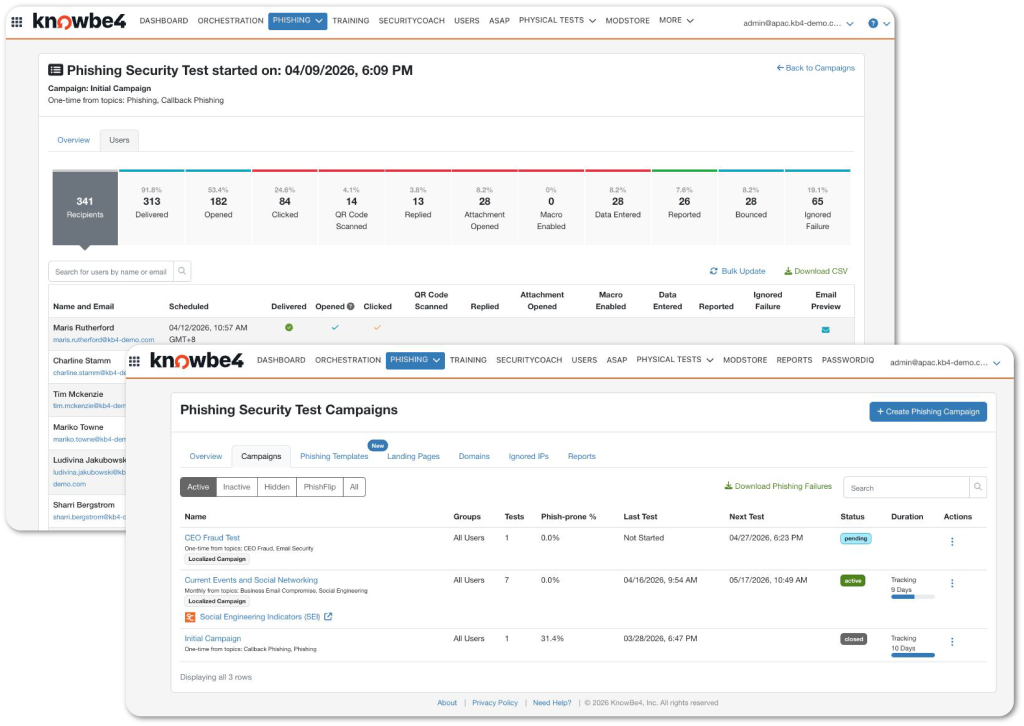
Simulate realistic phishing attacks to evaluate how employees respond to social engineering threats.
- Large library of phishing templates
- Customisable simulation campaigns
- Automated phishing tests
- Reporting on user response behaviour


Security Coach
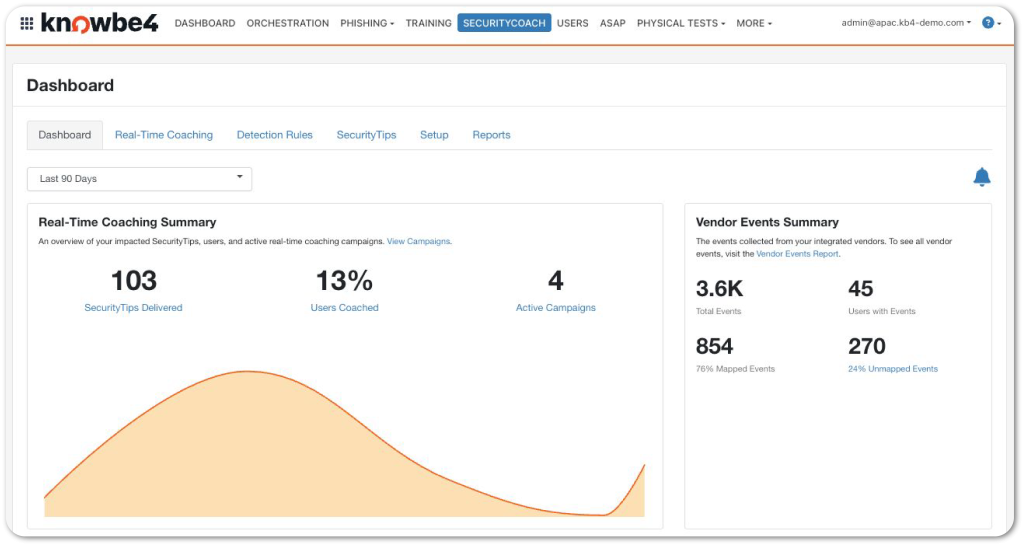
Provide real time security guidance when risky behaviour is detected.
- Contextual security reminders
- Behaviour based coaching
- Reinforcement of safe working practices
- Reduced human error risks
AI Defense Agent (AIDA)
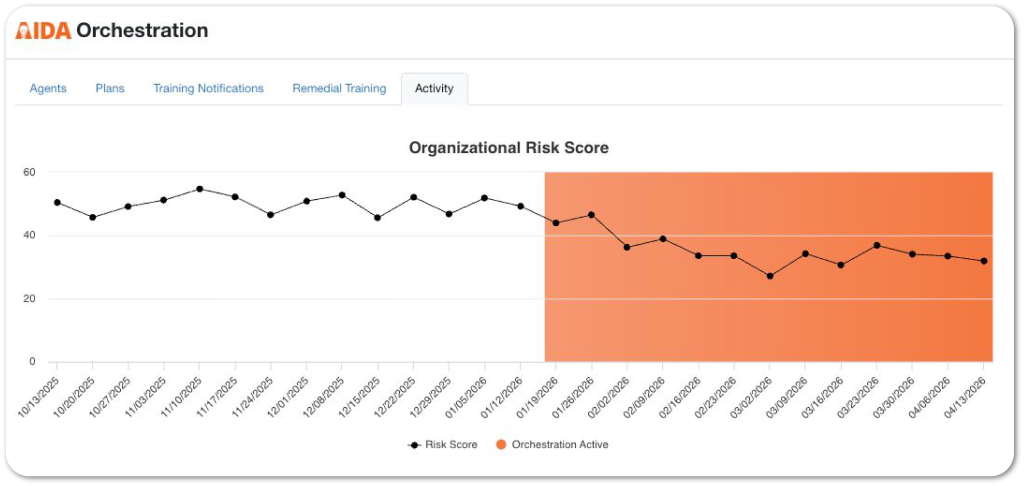
Use AI driven analysis to identify risky behaviours and provide personalised guidance.
- AI based behavioural analysis
- Risk detection and insights
- Automated security guidance
- Continuous employee awareness improvement


Compliance Plus
Deliver compliance and regulatory training programs for organisations.
- Industry specific compliance training
- Policy based training modules
- Support for regulatory requirements
- Strengthening organisational security culture
Building a Continuous Security Awareness Program
Baseline Phishing Assessment
Simulated phishing attacks help organisations measure how employees respond to realistic social engineering attempts.
Behaviour Analysis and Risk Identification
Analyse results to identify high risk users, vulnerable departments, and areas requiring additional security training.
Targeted Training and Simulations
Deliver role based security awareness training and targeted phishing simulations to reinforce safe behaviours.

Continuous Security Awareness Campaigns
Regular training and simulations help organisations build a stronger security culture over time.
Risk Insights and Executive Reporting
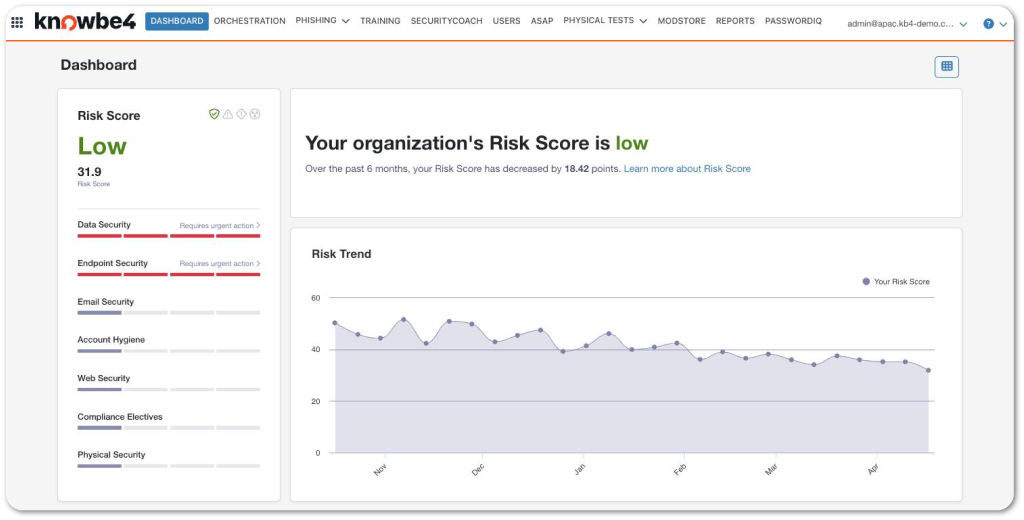
Security teams gain visibility into human risk through reporting, behavioural insights, and measurable security awareness metrics.
Ready to strengthen
your team's security awareness?
Deploying a security awareness platform is only the first step. Master Concept helps organisations design and run a complete programme — from simulation strategy and rollout to ongoing measurement — building a lasting security training mechanism.
Book an Expert ConsultationHow Master Concept

Helps You Implement KnowBe4?

Remediation Planning and Recommendations
We analyse phishing simulation results and employee behaviour to identify security gaps and recommend targeted training improvements.
Platform Implementation and Configuration
Our team supports organisations in deploying and configuring the KnowBe4 platform, including phishing simulations, training campaigns, and program settings.

Security Awareness Program Design
We help organisations design security awareness programs that align with their industry risks, internal roles, and security priorities.
Human Risk and Vulnerability Analysis
Simulation results and behavioural insights help organisations identify high risk users and vulnerable departments.

Custom Executive Reporting
Provide clear and structured reporting that helps leadership teams understand security awareness performance and human risk trends.
FAQ
What is security awareness training?
Security awareness training helps employees understand common cyber threats and develop safer security behaviours.
Training programs typically include educational content, phishing simulations, and ongoing security campaigns to reduce human risk.
What is phishing simulation?
Phishing simulation is a security testing method that mimics real phishing attacks.
Organisations send simulated phishing emails to employees to measure how they respond to social engineering attempts.
Why do organisations need security awareness training?
Many cyber incidents are caused by human error rather than technical vulnerabilities.
Security awareness training helps employees recognise phishing emails, avoid suspicious links, and protect sensitive information.
What is KnowBe4?
KnowBe4 is a leading human risk management platform that helps organisations reduce security risks caused by human behaviour.
The platform provides security awareness training, phishing simulations, behavioural insights, and security reporting.
Can KnowBe4 integrate with Microsoft 365 or Google Workspace?
Yes. KnowBe4 can integrate with common enterprise environments such as Microsoft 365 and Google Workspace,
allowing organisations to manage users and run phishing simulations more efficiently.

