
How much would you pay to secure your organization’s digital assets? Millions? Billions? What if the most sophisticated technical defenses could be bypassed with a single phone call, or a convincing video chat? Take the recent Qantas incident , where cybercriminals tricked an IT call center employee into bypassing multi-factor authentication, exposing sensitive customer data. This wasn’t a tech failure; it was a human one.
This is not an isolated incident, and it is a critical concern right here in Hong Kong. We have seen firsthand how human susceptibility leads to significant breaches. Remember the HK$200 million deepfake scam, where a finance worker was tricked by AI-generated video calls impersonating executives. (reference link: here) This was not a system flaw; it was a human being, deceived by convincing technology.
This blog post is about turning that vulnerability into power. By integrating Okta and KnowBe4, you can build a “human firewall”—a proactive, people-first defense that doesn’t just react to threats but prevents them. Let’s explore why human error is a risk and how this solution fortifies your organization.
The Problem: Human Error Opens the Door
The statistics don’t lie: email is a huge risk factor. It’s how we share sensitive data daily, yet tools like Outlook’s autocomplete make it a minefield. According to KnowBe4’s report, 91% of organizations using Microsoft 365 faced email data breaches—mostly due to human mistakes. On mobile devices, it’s even worse. Smaller screens and distracted moments (think late-night email checks) lead to misdirected files or emails. In fact, 72% of CISOs say data leaks via email are more likely on phones.

This prompts the question: How can we effectively combat phishing and bolster our security posture by integrating Okta and KnowBe4? So, how do we build this formidable “human firewall”? It means moving away from just reacting to problems and instead being proactive and smart about our defense. This is precisely where the integration of Okta and KnowBe4 presents a game-changing solution.
Phishing preys on those little mistakes we all make—like clicking a link when we’re rushed or distracted. One misstep, and your defenses can crumble. So, how do we tackle this? It’s not just about piling on more tech. The real key is empowering your team to recognize and block those threats before they cause harm.
Why Humans Are the Target
Humans aren’t perfect. We’re busy, curious, and sometimes too trusting. Cybercriminals exploit this with social engineering tactics designed to bypass even the best firewalls. A hurried employee might not notice a slightly off domain name in an email, or a stressed manager might approve an “urgent” request without double-checking. These aren’t failures of intelligence—they’re failures of awareness. The good news? Awareness can be built.
The Solution: Okta + KnowBe4 Creates a Human Firewall
Here’s where the integration of Okta and KnowBe4 shines. It’s not just about locking systems down; it’s about building a smarter, stronger team. This combo turns your employees into a “human firewall”—a living, learning layer of defense. Here’s how it works:
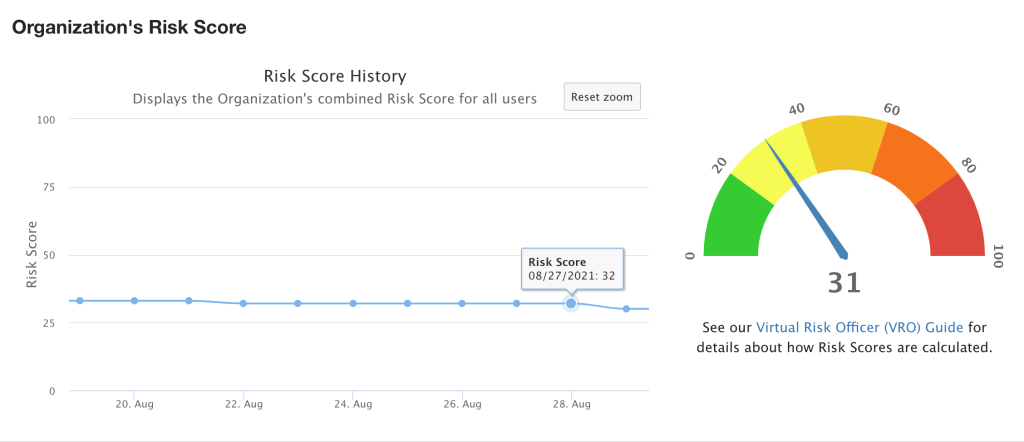
- Smart Access, Tailored Security: The integration between Okta and KnowBe4 is seamless and leverages the power of APIs and Okta Workflows. KnowBe4’s phishing simulations generate user risk scores based on how employees respond to mock attacks, whether they click the link, report it, or ignore it? These scores are then synced with Okta in real time. Okta uses this data to dynamically adjust security measures. For instance, if a user consistently falls for phishing attempts, their risk score spikes, prompting Okta to enforce stricter authentication protocols (like step-up MFA) or temporarily limit access to sensitive systems.
- This isn’t a blanket approach. Unlike static policies that treat everyone the same, this integration tailors security to individual behavior. It’s like having a personal security coach for each employee, stepping in exactly when and where they need it. Plus, with Okta’s identity governance, you can ensure that access rights align with roles—reducing the attack surface from the start.
A Real-World Example: Preventing a Breach Before It Happens
- Let’s consider Amy, an employee in the finance department with access to sensitive financial data. Through KnowBe4’s phishing simulations, it’s clear she has a high risk score—she’s clicked on suspicious links more than once. This data syncs with Okta, which flags her account and enforces additional security measures. For instance, Amy might now need multi-factor authentication (MFA) for every login, or her access to certain apps could be restricted until she completes a quick training module.
- One day, a phishing email disguised as an urgent invoice lands in her inbox. Before the integration, Amy might have clicked it, potentially exposing financial records. But now, with Okta’s heightened controls in place and KnowBe4’s training fresh in her mind, she pauses and reports it instead. The result? A potential breach is stopped cold, and Amy feels more confident in her role as a defender.

Training That Hits the Mark
Imagine security training that feels tailored to your daily tasks. That’s exactly what you get when Okta and KnowBe4 join forces. Okta provides rich user data, such as roles, departments, and access patterns, which KnowBe4 uses to design training that fits each employee perfectly. For example, an IT admin might dive into modules about securing privileged accounts and detecting advanced phishing tactics, while someone in marketing could focus on recognizing social engineering in emails or spotting fake LinkedIn requests.
This approach ditches the generic, one-size-fits-all training that often feels like a chore. Instead, it’s engaging and relevant because it reflects the real-world risks you encounter every day. The results speak for themselves: studies show this kind of tailored training can increase retention by up to 60% compared to standard programs. Employees don’t just sit through it—they actually take it in and put it to use. And with KnowBe4’s frequent, bite-sized simulations, that sharpness sticks around all year, not just during an annual refresher.
Clarity You Can Act On
Combine Okta’s user insights with KnowBe4’s training data, and you get a dashboard that’s both simple and powerful. See at a glance who’s thriving and who’s struggling—like an admin prone to phishing or a team with low reporting rates. This isn’t about pointing fingers; it’s about prioritizing support where it’s needed most. You can drill down to specifics—how many clicked a fake link last month?—and adjust training or policies on the fly.
This proactive visibility turns risks into opportunities. Real-world threats become teachable moments, and your team evolves into a dynamic shield against cyberattacks.
Fostering a Proactive Cybersecurity Culture
Tech is only half the battle. A truly secure organization needs a culture where everyone—from interns to C-suite—owns cybersecurity. Here’s how to make it happen:
- Leadership Buy-In: When execs champion security—like joining simulations or sharing their own “almost got phished” stories—it signals priority. Employees follow suit.
- Regular Communication: Keep it alive with monthly tips, success shoutouts (e.g., “Thanks, John, for reporting that phishing email!”), or quick videos in Slack or Teams.
- Gamification: Turn training into a game—leaderboards for reporting phishing attempts, badges for completing modules, or prizes for top performers. Fun drives engagement.
- Continuous Learning: Cyber threats evolve fast. Monthly micro-trainings or quarterly deep dives keep skills fresh, covering new scams like deepfake calls or QR code phishing.
- Empowerment: Give employees tools (like a “Report Phishing” button) and praise their wins. When they feel trusted to protect the company, they step up.

Why This Matters: Your People Are Your Power
Technology alone cannot fully protect your organisation; cybercriminals understand this and frequently target individuals because it proves effective. However, by combining Okta and KnowBe4, you can change this dynamic. Your employees will transform from potential vulnerabilities into your most valuable strength. This integration fosters a cybersecurity culture that is resilient, aware, and prepared for any challenge.
Avoid becoming the next cybersecurity headline. It’s time to invest in your most important asset: your people.
Ready to chat about boosting your cybersecurity and empowering your team?
Connect with Us. Let’s explore how a combined Okta and KnowBe4 solution can help you build a powerful human firewall and secure your organization’s future together.



![[Free Webinar] Road to COP17: Unifying Enterprise Data with Planetary-Scale Geospatial AI](https://masterconcept.ai/wp-content/uploads/2026/09/Webinar-261007-Unifying-Enterprise-Data-with-Planetary-Scale-Geospatial-AI-_1280x720px-scaled.png)