

For fleet managers and logistics coordinators, running cold chain logistics feels like a high-stakes race against time and temperature. In standard freight, a slight delay or a bumped box might cause a minor inconvenience. In cold chain operations, the margin for error is razor-thin. A half-degree temperature spike or an extra hour stuck in a traffic jam can easily ruin an entire shipment of fresh produce, dairy, or temperature-sensitive products.
Traditionally, cold chain management relied on drivers logging temperatures manually on paper or downloading batch reports hours after delivery. By the time anyone noticed a thermal breach, it was usually too late to save the cargo.
This article dives into how modern technology empowers teams to master three critical operational pillars of cold chain: precise temperature control, dynamic ETA tracking, and proactive exception alerts.
Table of Contents
What is Cold Chain Management?
Cold chain management refers to the systematic, uninterrupted, and temperature-controlled oversight across the supply chain required to store, transport, and deliver sensitive goods from production to the end consumer. If any link in this chain fails—a scenario known as a “cold chain break”—product quality, shelf life, and safety plummet immediately.
Cold Chain Logistics vs. Standard Logistics
The operational requirements and ways to manage cold chain cargo differ drastically from standard freight across three key areas:
| Comparison | Standard Logistics | Cold Chain Logistics |
|---|---|---|
| Environmental Control | Ambient conditions; focus on moisture & physical protection. | Strict thermal & humidity control (e.g., -18°C frozen, 2–8°C chilled). |
| Tolerance for Error | Moderate to High (minor delays rarely spoil goods). | Extremely Low (slight temperature difference destroys valuable goods). |
| Infrastructure Costs | Standard dry vans, basic warehousing. | Reefer units, multi-zone sensors, insulated bays, thermal monitoring. |
What Products Depend on Cold Chain Delivery?
Cold chain logistics plays a vital role across multiple high-stakes industries that rely on temperature-sensitive delivery:
- Perishable Foods & Beverages: Fresh meat, seafood, dairy, produce, and frozen meals that spoil quickly if exposed to ambient heat.
- Pharmaceuticals & Life Sciences: Vaccines, biologics, blood products, and lab specimens requiring strict thermal bounds to remain safe and effective.
- High-Value Specialty Chemicals: Industrial adhesives, semiconductor materials, and specialty coatings that degrade without continuous refrigeration.
Key Stages in Cold Chain Management
Maintaining an unbroken cold chain requires far more than just cranking up a reefer unit. Every step of the journey presents unique risks:
- Pre-Cooling & Loading: Reefers must be pre-cooled to the required setpoint before loading. Loading must happen fast so ambient air doesn’t warm the trailer interior.
- Long-Haul Transit: Long-distance cold chain transportation relies heavily on continuous reefer performance and real-time sensor streams.
- Last-Mile Delivery: Often the most vulnerable stage. Frequent door openings, urban traffic delays, and extended idling put severe stress on thermal maintenance.
- Cross-Docking & Transfers: Moving cargo between warehouses or vehicles must be timed perfectly to minimize exposure to unconditioned air.
Fleet Health Checklist: Is Your Cold Chain Vulnerable?
Use this quick diagnostic list to evaluate your fleet’s current operational posture:
- [ ] Can your dispatch team track cargo compartment temperatures in real time?
- [ ] Do drivers and back-office staff receive immediate notifications if a reefer temperature strays outside its safe threshold?
- [ ] Are dispatchers instantly alerted if cargo doors remain open past a safe threshold?
- [ ] Can you predict precise arrival times and automatically recalculate routes when traffic accidents or unexpected delays occur?
- [ ] Do you maintain tamper-proof, automated temperature records to streamline regulatory audits and client verifications?
If you checked “No” to two or more of these items, your operation is actively exposed to unnecessary cargo loss and financial risk!
Overcoming Cold Chain Blind Spots with Modern Technology
Precise Temperature Control
The biggest flaw in traditional cold chain management is data latency. Relying on passive USB dataloggers means discovering temperature breaches only after the truck arrives at the destination dock. Modern cold chain solutions solve this by shifting fleet operations from passive monitoring to proactive prevention.
1. Multi-Zone Hardware Integration
Modern reefer trucks frequently transport mixed payloads—such as frozen seafood at -18°C alongside fresh produce at 4°C. By integrating specialized hardware telemetry (like the Geotab IOX-COLD module), fleets can interface directly with leading reefer unit microcontrollers (Thermo King, Carrier). [1] Connecting multi-point 1-wire temperature probes and door sensors to a central telemetry unit allows dispatchers to monitor return-air, supply-air, and zone-specific temperatures across multiple bays simultaneously.
2. Door Status Monitoring & Fail-Safe Mechanisms
A significant percentage of temperature excursions occur during last-mile cold chain delivery. Every time a driver opens the rear door, cold air rushes out. If a door remains unlatched or is repeatedly opened and closed during prolonged unloading, interior temperatures fluctuate rapidly. Real-time door sensors track open/close states and trigger audio or dashboard alerts if doors remain open longer than pre-set thresholds.
3. Multi-Channel Real-Time Alerts
If a reefer engine stalls or a compartment warms beyond safety boundaries (e.g., a vaccine storage bay rising above 8°C), instant notifications are dispatched via SMS, mobile app, or central dashboard. This instant insight gives fleet managers the crucial window needed to contact the driver, adjust reefer settings remotely, or dispatch a backup vehicle before cargo spoils.
Dynamic ETA Tracking and Exception Management
In cold chain transportation, time directly impacts thermal risk and fuel costs. The longer a reefer truck sits stuck in highway congestion, the more fuel the cooling unit consumes and the higher the risk of mechanical strain. Coupling real-time thermal monitoring with dynamic routing is essential.
1. Constraint-Based Route Optimization
Standard consumer GPS apps fail in commercial environments. Cold chain route planning must balance complex operational variables:
- Strict Delivery Time Windows: Narrow customer receiving schedules.
- Compartment Capacity & Thermal Zones: Vehicle-specific payload limits.
- Driver Hours of Service (HOS): Regulatory rest breaks and driving caps.
Advanced AI-driven route optimization tools—such as Master Planner—process thousands of route permutations in seconds. They calculate optimal delivery sequences that minimize transit times, reduce engine idling, and deliver hyper-accurate ETAs to receiving docks.
2. Handling Unexpected Disruptions (Dynamic Replanning)
Unforeseen road closures, severe traffic jams, or last-minute customer order adjustments happen every day. When disruptions occur, modern technology automatically recalculates routes on the fly. If a reefer unit suffers a total mechanical failure en route, dispatchers can immediately identify the nearest available refrigerated truck with extra cargo space, re-route it for an emergency transfer, and preserve the shipment.
Smart Cold Chain Solutions: Geotab + Master Planner
Managing temperatures, ETAs, and unexpected exceptions across disconnected systems creates constant operational headaches. As an enterprise cloud services and AI transformation advisor, Master Concept helps fleet operators overcome these challenges by seamlessly combining Geotab telematics with Master Planner.
Comprehensive Temperature & Engine Telematics via Geotab
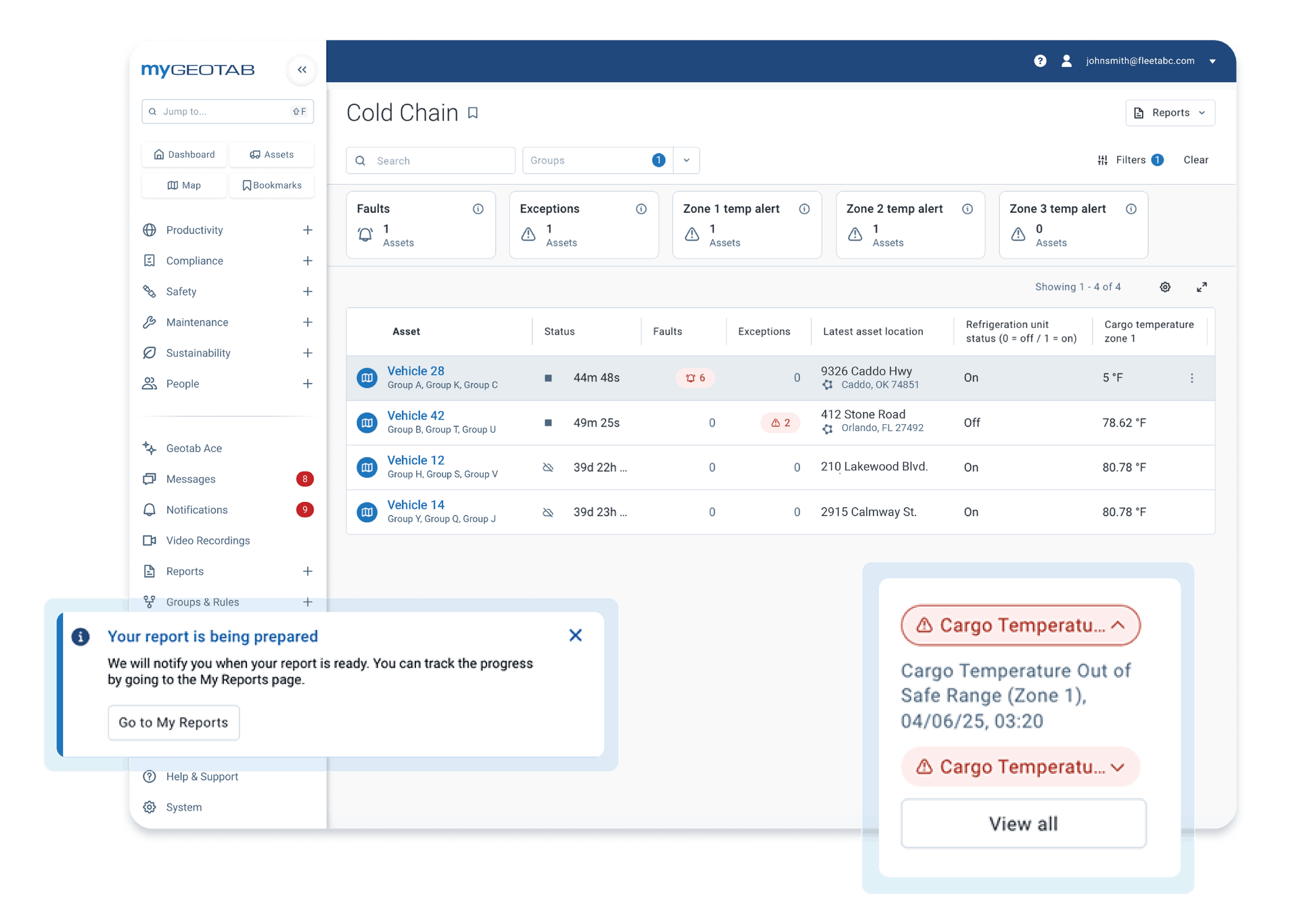
Using Geotab’s GO devices alongside the IOX-COLD expansion module, fleet managers gain real-time visibility into reefer performance. The platform streams compressor status, mode settings, fault codes, ambient temperatures, and door sensor data to a single dashboard. Additionally, Geotab generates automated, tamper-proof temperature audit logs, enabling fleets to verify regulatory compliance (such as FDA FSMA standards) effortlessly.
Accurate ETAs & Dynamic Scheduling via Master Planner
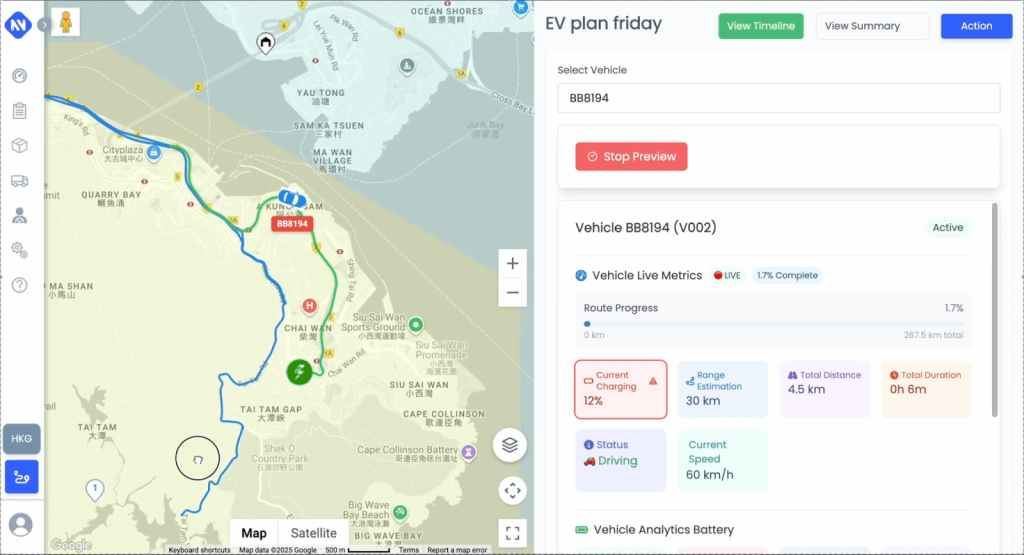
Master Planner pairs live traffic and weather analytics with vehicle types, payload capacities, driver schedules, and customer constraints. If a truck runs into unexpected highway congestion or a driver receives an urgent on-route pickup request, Master Planner recalculates optimal routes and stop sequences on the fly, updating dynamic ETAs automatically. Dispatchers gain complete visibility and control over fleet movements and compartment statuses across their entire operational footprint.
By uniting Geotab telematics with Master Planner AI route planning software, Master Concept equips logistics teams with comprehensive cold chain solutions designed to eliminate thermal blind spots and drive peak operational efficiency.
Now or Never: Manage Your Cold Chain Logistics Better
In cold chain logistics, the difference between a profitable delivery and a costly write-off comes down to visibility and speed. Continuing to rely on manual temperature logs or reactive tracking leaves your high-value cargo exposed to hidden risks every single mile. By shifting from passive monitoring to real-time AI-powered control, you don’t just protect your transportation assets—you protect your customer trust and your bottom line.
Ready to eliminate cold chain blind spots and transform your fleet operations? Connect with our experts at Master Concept, and see in action how Geotab and Master Planner solutions can bring full visibility and precision to every single delivery.
Frequently Asked Questions (FAQ)
How does cold chain management work?
Cold chain management works by continuously monitoring and controlling the climate of goods from production to final delivery. It uses specialized refrigerated vehicles (reefers), multi-zone temperature sensors, and real-time telematics to track compartment heat, door openings, and driver progress. If a temperature deviation occurs, dispatchers receive instant alerts to take corrective action before cargo spoils.
What are the primary causes of temperature breaches in cold chain logistics?
Temperature breaches typically happen during last-mile delivery when cargo doors stay open too long, when trailers are loaded without being pre-cooled, or during extended engine idling that reduces reefer cooling efficiency. Severe traffic jams and unexpected mechanical failures also force cooling units to overwork, increasing thermal risk.
What modern technologies are used in cold chain monitoring?
Modern fleets rely on IoT telematics systems like Geotab connected to reefer microcontrollers via specialized expansion modules (such as IOX-COLD). These systems combine multi-zone Bluetooth (BLE) temperature probes, electronic door sensors, and AI-driven route optimization tools (like Master Planner) to stream real-time temperature, location, and ETA data to a central dispatch dashboard.
How to reduce cold chain operational costs?
Operating costs can be reduced by adopting AI-driven route optimization to minimize mileage, cut engine idling, and lower fuel consumption. Real-time thermal alerts prevent costly cargo write-offs, while automated, tamper-proof temperature logs reduce administrative time spent on regulatory compliance and client verification audits.
References
- Geotab official support: IOX-COLD Support Document
- FDA FSMA: Sanitary Transportation of Human and Animal Food Rule


![[Free Webinar] Road to COP17: Unifying Enterprise Data with Planetary-Scale Geospatial AI](https://masterconcept.ai/wp-content/uploads/2026/09/Webinar-261007-Unifying-Enterprise-Data-with-Planetary-Scale-Geospatial-AI-_1280x720px-scaled.png)