

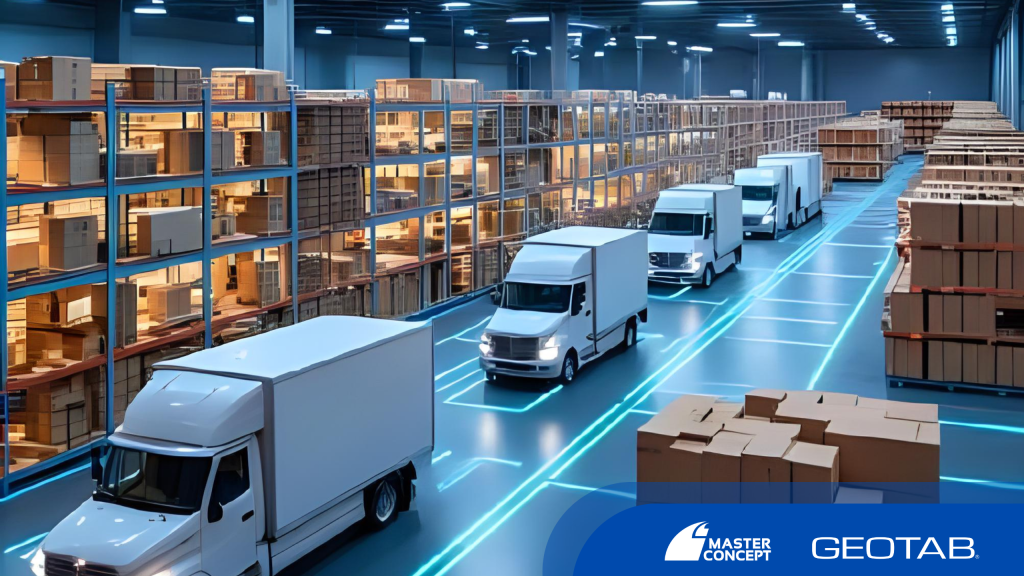
For logistics companies, warehouse management (WM) has long been a constant headache. Limited storage space, slow-moving inventory, low labor productivity, and poor data visibility are challenges that warehouse managers face almost every day.
In response, many businesses have traditionally focused on internal improvements—rearranging shelf layouts, fine-tuning picking routes, or adopting automation systems. These steps can help, but they only go so far. If warehouse operations remain disconnected from fleet transportation, the overall efficiency of the supply chain still suffers.
Warehouses and fleets, in fact, function as two sides of the same coin. Unreliable delivery times make it impossible to schedule receiving accurately, while unsynchronized data between inventory systems and fleets often leads to overstocking or stockouts. Over time, these gaps accumulate into costly inefficiencies.
The good news is that advances in AI and intelligent fleet tracking technologies are changing the equation. By extending visibility and coordination beyond the four walls of the warehouse, companies now have powerful tools to improve inventory turnover and raise warehouse efficiency to a new level.
Challenges in Warehouse Management: The Hidden Impact of External Factors
Even with a mature Warehouse Management System (WMS) in place, certain external variables can easily undermine the efficiency gains achieved inside the warehouse:
- Unstable inbound flow: Without reliable ETAs or consistent ASN (Advanced Shipping Notice) quality, receiving docks swing between idle and overwhelmed. Warehouses may carefully schedule unloading tasks, but if trucks arrive late or too early, the entire plan collapses.
- Dock and yard congestion: When multiple trucks arrive at once or staggered scheduling fails, vehicles idle at the gate burning fuel while loading bays sit empty waiting for paperwork. This wastes time, increases costs, and adds unnecessary carbon emissions.
- The in-transit “black box”: A TMS might know which trucks were dispatched, but without real-time location or traffic data, the WMS can’t prioritize which shipments to process first or delay. The lack of transport visibility forces managers to rely on guesswork, leading to overstaffing or underutilization.
- Outbound rhythm mismatch: Wave picking schedules may be set, but if trucks arrive late or reroute last minute, picking zones are repeatedly rearranged and productivity is diluted. Misaligned timing between warehouse operations and fleet schedules slows down order fulfillment.
- Empty backhauls and missed transfers: Without visibility into return trips, cross-warehouse transfers can’t operate on a just-in-time basis, keeping empty truck ratios high. Many companies overlook the value of backhaul capacity, treating it as a loss instead of a resource.
At the core of these challenges is a simple truth: WMS lacks external visibility. A warehouse can optimize its internal processes all it wants, but as long as the fleet’s timeline remains unpredictable, efficiency gains will be eroded.
Are Existing Fleet Tracking Solutions Enough to Close the Warehouse Gap?
Warehouse management is a complex discipline, involving multiple processes and dependencies. Yet, modern fleet management tools already provide a way to bridge partial of the gap — using AI-powered fleet tracking to quantify and anticipate in-transit variables. Once this data is fed into the WMS/TMS and scheduling systems, warehouses gain a predictable flow instead of constant surprises. The goal is not to rebuild your entire system, but to get three critical capabilities right:
- Reliable ETAs (beyond static mileage estimates): By combining real-time vehicle location, historical route performance, and current traffic conditions, dynamic ETAs give warehouses a realistic timeline for inbound shipments. This allows managers to allocate staff and dock space ahead of time, reducing congestion during peak receiving hours.
- Dock and yard visibility: With geofencing and dwell time tracking, dock assignments and appointment scheduling are backed by data rather than guesswork. Instead of relying on manual checks, warehouses can visualize yard activity, monitor delays, and ensure every movement is recorded.
- Event-driven data integration: Critical events such as truck arrival, departure, route deviations, or temperature anomalies can instantly trigger WMS workflows via APIs or webhooks. Whether it’s opening work orders, releasing storage slots, or sending notifications, this real-time feedback loop enables warehouses to adjust operations automatically rather than reactively, boosting overall stability.
How AI Fleet Tracking Resolves Six Key Warehouse Management Scenarios
Smoothing Inbound Deliveries
- Pain Point: Supplier arrivals are unpredictable, often clustering at peak hours and overwhelming docks.
- Solution: Sync real-time vehicle positions and AI-driven ETAs with dock scheduling to automatically reshuffle time slots. When ASN data is missing or unreliable, live vehicle data replaces “paper forecasts.”
- Impact: Reduced inbound spikes, shorter average dwell times, and fewer last-minute overtime shifts. Receiving becomes more predictable, easing staffing pressure and enabling proactive resource allocation.
De-congesting Docks and Yards
- Pain Point: Trucks queue at the gate, vehicles go missing inside the yard, while docks remain idle.
- Solution: Deploy geofences at gates, docks, and waiting zones to automatically log arrivals and departures. Match vehicle plates or job IDs to trigger early job creation and dock assignments.
- Impact: Gate wait times, dock utilization, and throughput per vehicle can all be tracked and improved. Less idle queuing reduces fuel consumption, bringing both environmental and financial benefits.
Aligning Waves to Wheels
- Pain Point: Picking waves are pre-scheduled, but late arrivals or reroutes force constant re-handling.
- Solution: Feed dynamic ETAs back into the wave engine to reshuffle tasks in real time. Notify teams instantly when vehicles arrive or deviate.
- Impact: Higher on-time shipment rates, fewer pick relocations, and better floor efficiency. Integrating wave planning with live fleet data cuts rework and error risks significantly.
Accelerating Inventory Turns (JIT Replenishment & Cross-warehouse Transfers)
- Pain Point: Safety stock is set too high, while replenishment and transfers often lag.
- Solution: Treat in-transit goods as visible inventory, with ETAs determining precise replenishment timing. Leverage real-time return-trip data to trigger transfer loads.
- Impact: Reduced days of inventory on hand, lower stockout rates, and minimized empty return trips. This makes true JIT possible while freeing up capital tied to excess stock.
Tracking Cold Chain & High-value Goods
- Pain Point: Temperature deviations or route anomalies are often detected too late, leaving accountability unclear.
- Solution: Vehicle sensors transmit live temperature and door status; anomalies trigger WMS/TMS workflows and customer service alerts. Route deviations activate risk control protocols.
- Impact: Faster incident response, fewer spoilage and claims, and reduced customer complaints. Real-time monitoring ensures sensitive and high-value goods remain protected throughout the journey.
Streamlining Reverse Logistics & RMAs
- Pain Point: Reverse logistics are unpredictable, leading to sudden spikes at collection points.
- Solution: Use live site volumes and fleet positions to dynamically consolidate loads or reroute vehicles. RMA arrival events trigger pre-built repair orders.
- Impact: Shorter turnaround times for returns, fewer overloaded days at collection points, and lower secondary delivery costs. Reverse logistics efficiency not only saves money but also improves customer experience by making returns and repairs smoother.
Key Takeaway: Each scenario follows a closed-loop approach — from pain point → event-driven data → automated actions → measurable KPIs. This shifts warehouses from space management to rhythm management.
Implementation Roadmap: 5 Steps from POC to Full Deployment
- Define KPIs and Measurement Methods:
Start with 3–5 visible performance metrics — for example, dwell time, on-time inbound rate, dock utilization, or number of wave reschedules. These KPIs make it easier to quantify improvements and prove value early. - Integrate Data Streams:
Use APIs or webhooks to connect WMS, TMS, and fleet platforms, enabling real-time event flows such as arrivals, departures, route deviations, or temperature anomalies. - Build Geofence Models:
Set up geofences around each warehouse, gate, yard, and waiting zone. Every entry and exit is automatically time-stamped, creating reliable visibility. - Run a Small-scale POC:
Select one warehouse and two transport routes (one inbound, one outbound). Run real tasks for four weeks and track changes in the chosen KPIs to validate impact. - Scale and Institutionalize:
Translate effective event–action rules into SOPs. For example: “If ETA ≤ 30 minutes, automatically release picking tasks.” Continue refining the ETA model to maintain accuracy and ensure long-term efficiency gains.
How Geotab’s AI Fleet Management Aligns with Warehouse KPIs
Geotab is a global leader in fleet management, combining AI, big data analytics, and real-time vehicle tracking to give enterprises full visibility — from live vehicle locations and driver behavior analysis to last-mile delivery dynamics.
- Real-time Location & AI ETA:
Based on historical route patterns and live traffic conditions, Geotab delivers highly reliable ETA predictions. These feed directly into WMS/TMS for dock scheduling, wave rescheduling, and labor planning.
- Geofence & Dwell Time Tracking:
Automatically captures arrival, waiting, loading, and departure times for each dock, gate, and yard, turning these into standardized KPI measurements.
- Event-driven Webhooks:
Triggers real-time workflows in WMS whenever key events occur — such as arrival, departure, route deviation, extended idling, or temperature anomalies — to automate tasks like opening work orders, releasing storage, or notifying staff.
- Vehicle Health & Predictive Maintenance:
Detects maintenance risks (e.g., engine, tire, or battery issues) before they cause delays. This proactive visibility allows operations to reassign routes and prevent last-minute shipment failures.
- Route Compliance & Risk Monitoring:
For high-value or hazardous goods, Geotab enforces compliance with predefined routes and stop rules. Any deviation instantly triggers alerts, with optional notifications to security teams or customer service.
- Open API & Data Governance:
Provides transparent, controllable data that integrates seamlessly with WMS, TMS, and BI platforms (such as Power BI or Looker), enabling a “single source of truth” for logistics operations.
In Summary: How Geotab Elevates Warehouse Management
- Maximize Space Utilization: Accurate ETAs allow warehouses to pre-allocate receiving zones, reducing temporary storage needs, minimizing congestion, and avoiding wasted floor space.
- Accelerate Inventory Turnover: Real-time visibility into in-transit goods supports Just-In-Time (JIT) strategies, ensuring inventory flows on demand while reducing stockpiling risks.
- Optimize Labor & Process Scheduling: Warehouse teams can align picking and receiving operations with live transport status, cutting idle time and improving overall workflow efficiency.
- Ensure Uninterrupted Operations with Predictive Maintenance: AI-powered vehicle health monitoring prevents shipment delays by addressing issues before breakdowns occur.

- Enhance Safety with Driver Behavior Analytics: Analyzing risky driving patterns lowers accident rates, safeguards goods in transit, and indirectly reduces warehouse damages and insurance costs.

- Enable Full Visibility & Data-Driven Decisions: Beyond vehicles and goods, Geotab integrates with third-party platforms to provide a unified view of operations. This empowers warehouse managers to make informed, real-time decisions across the entire supply chain.

The Next Step Toward Smart Logistics: Synchronizing Warehouses and Fleets
A warehouse and its transport network cannot operate in silos — it’s like driving a car without a steering wheel: no matter how powerful the engine is, it won’t move in the right direction. The real value of smart fleet tracking only emerges when Warehouse Management Systems (WMS) and Transportation Management Systems (TMS) are tightly integrated. But the key question is: how can enterprises actually make this happen?
Three Essential Steps for Enterprise Adoption
- Unify Data Through a Single View: Consolidate inbound, outbound, and inventory data from the warehouse with fleet transport information into one platform. This eliminates data silos and ensures that every operational decision is supported by real-time insights.
- Enable Intelligent Scheduling Across Operations: Use AI and automation tools to align warehouse and transport processes. For example, automatically matching vehicle ETAs with available dock space prevents congestion, idle waiting, and unnecessary handling.
- Continuously Optimize Through Closed-loop Management: Feed the results of each inbound, outbound, and transport operation back into the system. This continuous cycle of feedback enables ongoing adjustments to workflows, routes, and workforce allocation, creating a self-evolving logistics ecosystem.
Smart logistics is not about isolated optimizations; it’s about system-level collaboration between warehouses and fleets. When both work in sync, every warehouse and every truck becomes an accelerator for the supply chain — not a bottleneck.
Conclusion — Making Warehouses “Bigger” Doesn’t Mean Renting 1,000 More Square Meters, It Means Wasting 1,000 Fewer Minutes
For logistics enterprises, overcoming warehouse constraints — limited space and operational inefficiencies — requires more than internal optimization alone. The real breakthrough lies in tightly integrating warehouse management with fleet operations and leveraging AI-powered fleet tracking. This approach not only accelerates inventory turnover and maximizes space utilization, but also reduces overall operational costs.
At its core, warehouse management is about turning uncertainty into rhythm. By feeding real-time fleet data — including vehicle location, ETA, and event triggers — into WMS/TMS, inbound peaks are smoothed, dock congestion disappears, wave schedules stay on track, and inventory stagnation is minimized.
Geotab, a global leader in AI fleet management, has already helped countless enterprises establish smarter connections between warehouses and transportation. If your organization wants to boost warehouse efficiency and cut costs through AI-driven fleet tracking, there’s no better time to take action! 👉 Want to see how Geotab can bring these scenarios to life and seamlessly integrate with your WMS/TMS? Contact us today!
Geotab × Powerplay Limited-Time Offer Program
Struggling with fleet management? Is your current vehicle device or fleet management system falling short of your enterprise needs? Let Geotab be your intelligent fleet assistant!
🔥 Limited-Time 3-Month Free Powerplay Trial:
✦ Free GO Device hardware + harness
✦ Free 3-month subscription
✦ Free deployment, setup, and full onboarding
Reference List:
https://www.tribe.ai/applied-ai/ai-in-fleet-management
https://lumenalta.com/insights/9-reasons-cios-are-using-ai-for-warehouse-and-fleet-optimization
https://nextbillion.ai/blog/using-geotab-with-nextbillion
https://www.newcastlesys.com/blog/8-common-warehouse-management-problems-and-how-to-address-them
https://www.goramp.com/blog/warehouse-management-challenges




![[Free Webinar] Road to COP17: Unifying Enterprise Data with Planetary-Scale Geospatial AI](https://masterconcept.ai/wp-content/uploads/2026/09/Webinar-261007-Unifying-Enterprise-Data-with-Planetary-Scale-Geospatial-AI-_1280x720px-scaled.png)