
This is the vision behind the seamless integration of Google Threat Intelligence (GTI) and Google SecOps. These two products are designed to work in synergy, creating a powerful, AI-driven security ecosystem that not only detects threats but also anticipates and responds to them with unprecedented speed and precision. Together, they form the core of a modern Security Operations Center (SOC) that is more proactive, efficient, and resilient than ever before.
This blog post focused on exploring the core vision behind the powerful combination of Google Threat Intelligence (GTI) and Google SecOps, and more importantly, how their symbiotic relationship empowers your security team to operate at the speed and scale of Google.
From Alert Overload to Confident Defense: Orchestrating Your Security with Google SecOps
For too long, security professionals are tired of being overwhelmed by too many alerts.
The daily grind of paying attention to thousands of notifications, many of which are false positives, leads to burnout and more critically, the risk of missing a genuine threat. This is where Google SecOps steps in as the operational command center for the modern SOC, transforming the situation of alert overload into a confident, orchestrated defense.
Google SecOps moves beyond the limitations of traditional SIEM (Security Information and Event Management) and SOAR (Security Orchestration, Automation, and Response) tools by unifying them into a single, scalable, and intuitive platform. It aims to streamline workflows and empower analysts to focus on what truly matters. A major focus has been making the platform much adaptive. New features and a more straightforward UX design help users quickly scan through massive amounts of data and easily spot important patterns you might otherwise miss.
At the core of this platform is a powerful automation engine. Instead of manually enriching alerts or executing response actions, analysts can leverage automated playbooks and AI-powered agents to handle these tasks instantly. For example, when a suspicious event is detected, SecOps can automatically:
- Enrich the alert with context from GTI
- Check the status of the affected asset
- Isolate the endpoint from the network
- Create a ticket in the incident response system

This orchestration is the key to reducing the Mean Time to Resolution (MTTR) from hours or days to mere minutes. By automating the manual and repetitive tasks, Google SecOps supports your human expertise for high-level threat hunting and strategic defense. It’s not just a tool for collecting logs; it’s a platform for orchestrating a powerful and coordinated security response.
From Data Chaos to Actionable Intelligence: Unlocking the Power of Google Threat Intelligence (GTI)
While Google SecOps provides the operational “how,” Google Threat Intelligence (GTI) provides the critical “what” and “who.” Over years, security teams have relied on a variety of threat feeds, often with conflicting information, leading to confusion and slow response times. GTI addresses this by acting as a single, trusted source of truth, consolidating intelligence from:
- Google’s Unparalleled Global Visibility: The vast data from Google’s services provides a broad and deep understanding of the threat landscape
- Mandiant’s Frontline Expertise: Intelligence from Mandiant’s world-class incident responders, who are on the front lines of the most sophisticated cyber attacks
- VirusTotal’s Massive Crowdsourced Database: The collective intelligence from a global community of security researchers and analysts

This powerful combination allows GTI to deliver a unified verdict—a single, definitive assessment of a threat’s maliciousness, eliminating the guesswork. But GTI goes further by infusing its platform with generative AI:
- Gemini Virtual Threat Analyst: An AI that acts as a force multiplier for security teams, summarizing complex threat campaigns and prioritizing the threats that pose the most immediate risk to your organization
- Code Insight: A groundbreaking feature that uses AI to automatically analyze and summarize code, helping analysts quickly understand a file’s purpose without manual reverse engineering.
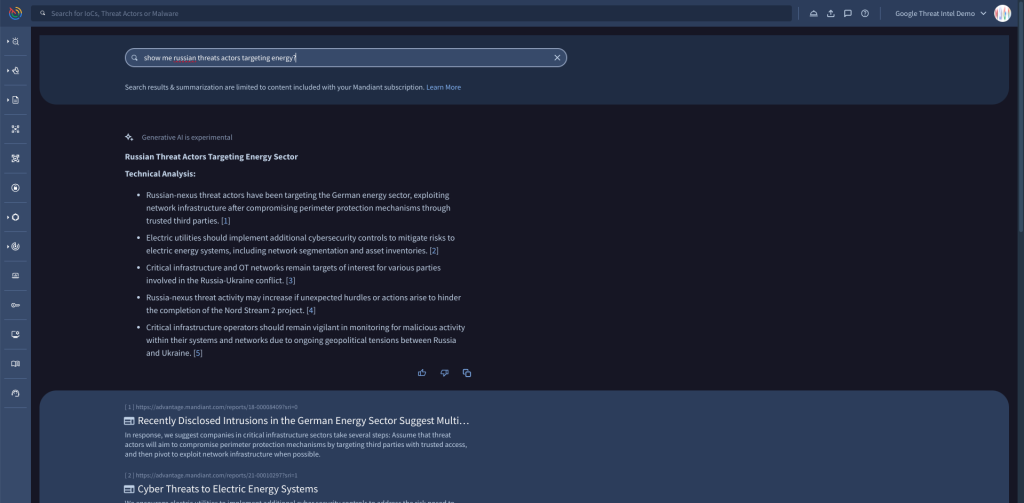
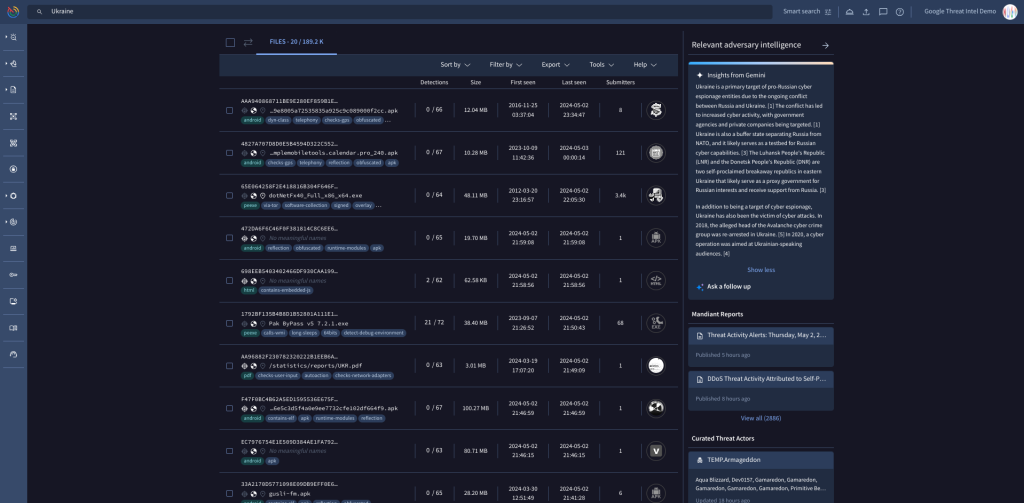
This centralized and intelligent approach transforms a mountain of chaotic data into clear, actionable intelligence, empowering teams to make smarter, more strategic decisions.
The Brain and the Brawn: How GTI and Google SecOps Form a Unified Defense
The true strength of Google’s security vision lies in the seamless, symbiotic relationship between Google SecOps and GTI. These are not two separate products that you integrate, they are a single, cohesive ecosystem. GTI is the “brain”, the source of intelligence that directs those actions; while SecOps is the “brawn”, the engine that performs the actions. This tight integration ensures that every operational decision is informed by the most current and comprehensive threat intelligence available.
Consider an incident involving a phishing attempt. Google SecOps detects the malicious email and its associated URL. Instead of an analyst manually checking the URL against various sources, SecOps automatically queries GTI. GTI’s unified verdict quickly confirms the URL is malicious, provides information on the related threat campaign, and identifies the TTPs used by the threat actor (e.g., using a specific malware family).
Armed with this rich, real-time intelligence from GTI, Google SecOps can automatically trigger a response. The platform can:
- Immediately quarantine the email across all inboxes
- Block the malicious URL at the firewall level
- Use Mandiant’s intelligence to search for other related IOCs within your network
- Deploy a new YARA rule to hunt for similar threats
This deep integration allows security teams to move at machine speed. The intelligence from GTI doesn’t just sit in a report; it directly fuels the automated and orchestrated responses in SecOps. The synergy closes the critical gap between intelligence and action, ensuring that your defense is not just reactive but at the same time wisely proactive.
The Google Advantage: Closing the Gap Between Threat Intelligence and Incident Response
A common failing of many security programs is the breach between threat intelligence and incident response. Intelligence is often gathered and stored in one system, while operational response is handled in another, leading to a slow and fragmented defense. What Google is strong at is a unified security model that closes this gap completely.
| The Traditional Approach | The Google Advantage |
| Data Silos Threat intelligence and security operations are separate, leading to a slow and manual process of correlating data | Unified Platform Google SecOps and GTI are tightly integrated, making intelligence a direct trigger for automated action |
| Reactive Defense You only know about an attack when an alert is triggered, you have no choice but chasing after threatens that already happened | Proactive, Intelligence-Led Defense GTI’s Digital Threat Monitoring (DTM) provides visibility into external threats, allowing you to anticipate attacks before they impact your network |
| Slow, Manual Response Analysts must manually search for related indicators and build a response plan, causing significant delays | Automated, Rapid Response Intelligence from Mandiant and GTI automatically enriches alerts and fuels automated SecOps playbooks, enabling a near-instant response |
| Generic Vulnerability Management Time is spent patching all vulnerabilities, regardless of whether they are actively being exploited | Threat-Driven Prioritization GTI data helps you prioritize patching efforts based on which vulnerabilities are being actively weaponized in the wild |
The seamless connection between Google SecOps and GTI creates a continuous feedback loop that ensures your defenses are always being updated with the latest insights from real-world, high-stakes investigations. This intelligence-led response is the ultimate competitive advantage in the modern cybersecurity landscape.
Future-Proofing Your SOC: What’s Next with Google’s Unified Security Platform
The journey of GTI and Google SecOps is part of a larger strategic vision to build a truly unified, AI-driven security platform. The ongoing evolution of these products is focused on anticipating future threats and providing a scalable, resilient solution for any organization.
The transformation of Google SecOps and GTI is a clear signal that the future of security is unified, intelligent, and proactive. By moving away from siloed tools and embracing an integrated, AI-powered ecosystem, organizations can future-proof their SOC, empower their analysts, and build a defense that is capable of operating at the speed and scale required to face the challenges of tomorrow.
With the recent announcement of Google that customers could no longer continue with VirusTotal solely, but integrating this product into a more powerful package—Google Threat Intelligence (GTI), it will be a perfect moment to start exploring the unified security platform together with Google SecOps.
Ready to move from a reactive security stance to a proactive one?
Contact us today. We’ll show you how GTI and Google SecOps can empower your team to face today’s most complex threats with clarity and precision.

![[Free Webinar] Road to COP17: Unifying Enterprise Data with Planetary-Scale Geospatial AI](https://masterconcept.ai/wp-content/uploads/2026/09/Webinar-261007-Unifying-Enterprise-Data-with-Planetary-Scale-Geospatial-AI-_1280x720px-scaled.png)