

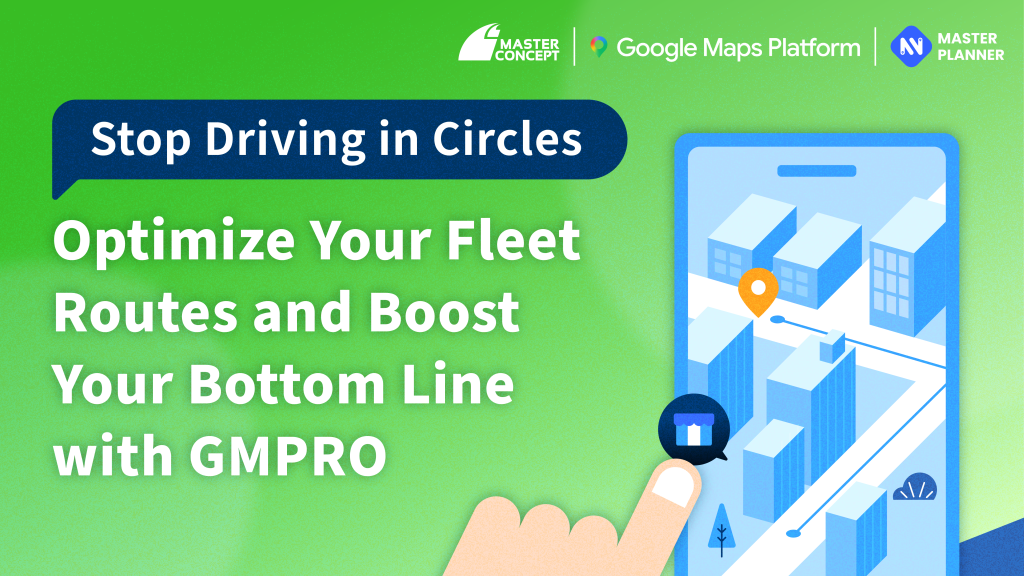
Conquering Complex Routing Beyond Basic Tool Limitations
Managing fleets for deliveries or field services involves navigating a daily maze of coordinating vehicles, meeting tight schedules, and satisfying high customer expectations amid fluctuating costs. Many businesses start with standard mapping apps or manual planning, but these quickly become inefficient as operations grow.
Key limitations include restrictive stop limits (e.g., often 10 stops per vehicle in basic maps) and the lack of true optimization – they don’t automatically find the most efficient sequence for multiple stops. Planners waste time manually guessing the best routes, leading to higher fuel consumption and operational costs. Furthermore, manually juggling critical real-world constraints like customer time windows, vehicle capacities, driver work hours, and mandatory breaks is extremely difficult and error-prone. Ignoring these leads to missed deadlines, wasted resources, compliance issues, poor customer experiences, and ultimately hinders business growth.
Recognizing these challenges, businesses need a more intelligent solution. Google Maps Platform’s Route Optimization API is engineered specifically to tackle this complexity, moving beyond simple directions to offer strategic, automated planning.
Introducing Google Maps Platform Route Optimization: Your Fleet’s New Planner
Google Maps Platform’s Route Optimization API provides a powerful answer to these challenges. It is an advanced tool designed to automatically calculate the most efficient routes and schedules for multiple vehicles simultaneously, taking into account a wide array of operational variables.
The core concept is straightforward yet powerful. Businesses provide the API with essential information through a structured request:
- Shipments/Tasks: A list of all jobs to be completed, including pickup and delivery locations, required service times, specific time windows, and shipment details like size or weight.
- Vehicles: Details about the available fleet, including the number of vehicles, their starting/ending locations, capacities (weight, volume, etc.), and driver work schedules, including breaks.
- Objectives & Constraints: The specific business goals guiding the optimization (e.g., minimize total travel time, reduce cost, ensure on-time arrivals) and the operational rules that must be followed (e.g., time windows, vehicle capabilities).
Armed with this information, the API leverages Google’s sophisticated, award-winning Operations Research (OR) technology, running on Google’s robust and scalable cloud infrastructure. These algorithms analyze the complex interplay between tasks, vehicles, constraints, and objectives to generate an optimized plan. The response provides a detailed solution, outlining the optimal assignment of tasks to each vehicle, the precise sequence of stops for each route, and calculated metrics like travel times and distances.
This enables businesses to shift from reactive problem-solving to proactive, intelligent planning, designing efficient and resilient operations from the outset. Essentially, Google packages complex optimization science and scalable computing power into an accessible API, making advanced logistics planning capabilities available to businesses of all sizes.
Making Complex Routing Simple: Key Features & Real-World Applications

Source: Master Planner
The Route Optimization API translates complex logistics problems into manageable solutions through a suite of powerful features. Here’s how key capabilities address real-world business needs:
- Plan for the Whole Fleet (Multi-Vehicle Routing): Instead of planning routes individually for each vehicle in isolation, the API considers the entire fleet and all tasks collectively. It intelligently distributes the workload across available vehicles to generate the most efficient overall plan.
Example: A distribution company with 15 vans and 300 deliveries spread across a city can use the API to automatically determine which van serves which cluster of stops and the optimal sequence for each van, minimizing total fleet mileage and ensuring a balanced workload, rather than relying on manual territory assignments that may be suboptimal.
- Hit Every Target (Time Windows & Deadlines): Businesses can specify mandatory time windows for pickups, deliveries, or service appointments. The API generates routes that strictly adhere to these time constraints.
- Know Your Limits (Vehicle Capacity Constraints): The API allows defining vehicle capacities based on weight, volume, or item count. It then assigns tasks ensuring no vehicle exceeds its limits.
- Tailor to Business Goals (Custom Objectives): The API offers flexibility to optimize routes based on different business priorities. Users can configure it to primarily minimize total travel time, reduce total distance (often correlating with fuel costs), maximize on-time arrivals, minimize the number of vehicles used, or balance the workload evenly across the fleet.
The ability to handle these intricate constraints simultaneously is where the API delivers significant value. It moves beyond simply finding the shortest path to solving the complex, constrained optimization problem that businesses face daily, turning logistical challenges into operational strengths.
The Google Advantage: Why Choose Our Route Optimization?
Several factors distinguish Google Maps Platform’s Route Optimization API, offering unique advantages for businesses seeking efficient fleet management:
- Unrivaled Accuracy and Realism: Leverages integrated Google Maps data, including predictive traffic, for highly accurate ETAs and routes reflecting real-world conditions, unlike static data solutions.
- Proven Scalability and Power: Built on Google’s infrastructure with advanced algorithms to handle large fleets and complex problems efficiently, supporting practically unlimited scale as shown by user success.
- Seamless Integration and Flexibility: Easily integrates via REST/gRPC, offering synchronous and asynchronous methods to fit different problem sizes and existing system workflows.
- Developer Efficiency and Cost Savings: Provides free request validation, client libraries for popular languages, and easy integration with Last Mile Fleet Engine, accelerating development and reducing effort.
Tangible Results: The Business Impact of Route Optimization
Adopting Google Maps Platform Route Optimization translates directly into measurable business improvements across multiple fronts. The impact goes beyond just finding shorter routes; it creates a cascade of positive effects:
- Slash Operational Costs: Reduces fuel, maintenance, and overtime expenses by minimizing distance traveled and optimizing schedules.
- Boost Productivity and Efficiency: Enables handling more tasks with existing resources and frees up staff by significantly cutting planning time.
- Enhance Customer Satisfaction: Improves reliability and meets time windows with accurate ETAs based on real-time data.
- Improve Driver Experience: Reduces stress and improves retention through balanced workloads and predictable schedules.

Source: Master Planner
Putting everything together, achieving peak operational excellence in fleet management requires moving beyond basic tools to intelligent, data-driven planning. Google Maps Platform Route Optimization API provides the foundational power and flexibility to transform fleet operations, leveraging sophisticated algorithms and real-time data for significant cost reductions, productivity gains, enhanced customer experiences, and improved driver well-being. For businesses with the most intricate demands, this advanced capability serves as a core component; if you are looking for a more ready and comprehensive strategic planning solution built upon this power, consider exploring solutions like Master Planner to address the full spectrum of complex logistical challenges.
-1024x256.png)


![[Free Webinar] Road to COP17: Unifying Enterprise Data with Planetary-Scale Geospatial AI](https://masterconcept.ai/wp-content/uploads/2026/09/Webinar-261007-Unifying-Enterprise-Data-with-Planetary-Scale-Geospatial-AI-_1280x720px-scaled.png)