

Asana Singapore Partner | Enterprise Work Management for Your Business
As an Asana Solution Partner in Singapore, Master Concept helps organisations reduce “work about work”, streamline project management, and align teams with greater visibility and control.

Where Is Your Organisation Today?

Fragmented Collaboration
- Multiple tools across departments
- Status updates depend on meetings
- Conversations and execution are disconnected
- No single source of truth
You need:
Workflow orchestration
From Fragmentation to Workflow Orchestration
When collaboration is fragmented, coordination overhead increases. Meetings multiply. Status chasing becomes normal.
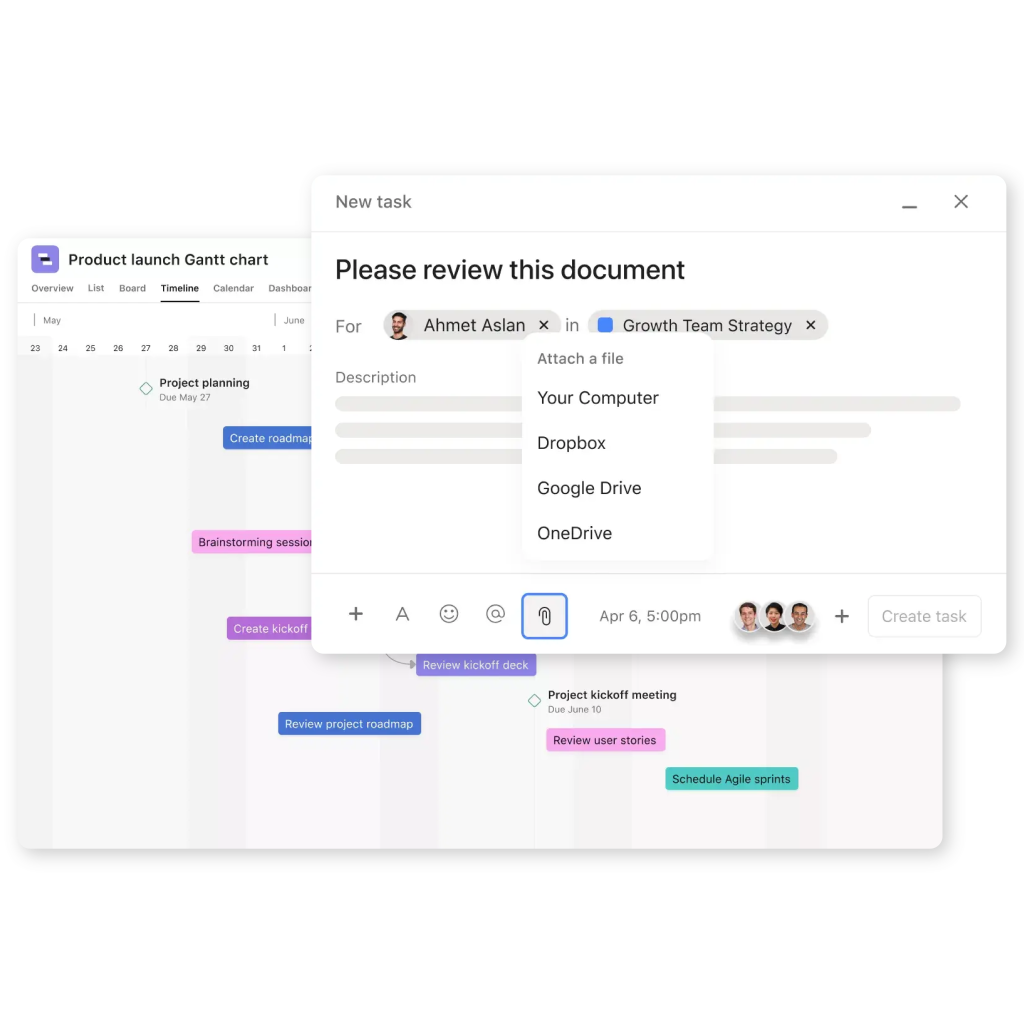
- Tasks, ownership, and deadlines in one place
- Conversations tied to project context
- Dependencies tracked automatically
- Single source of truth across departments

Instead of managing updates, teams manage outcomes.

Growing Project Complexity
- Managing 5-10 concurrent initiatives
- Resource allocation unclear
- Reporting requires manual consolidation
- Leadership lacks portfolio-level visibility
You need:
Structured portfolio governance
From Complexity to Portfolio Governance
Managing multiple projects without structure leads to resource overload, hidden risks, and strategic misalignment.
- Multi-project oversight with Portfolios
- Executive dashboards and health indicators
- Workload balancing across teams
- Real-time project status visibility

Leadership gains visibility without increasing meeting frequency.

Regulated Enterprise Environment
- Procurement requires security documentation
- IT mandates SSO, SCIM, or EKM
- Compliance reviews delay SaaS approval
- Role-based permissions are critical
You need:
Enterprise-ready infrastructure
Enterprise Security & Compliance
In regulated environments, SaaS adoption must pass security and governance review.
- SOC 2 Type II and ISO 27001
- Enterprise Key Management (EKM)
- SSO & SCIM provisioning
- Audit logs and permission controls
Security is not an add-on — it is foundational.

Regional HQ Execution Alignment
- Strategy defined centrally, executed across SEA
- Managing teams in multiple markets
- OKRs exist but lack operational linkage
- Cross-market visibility is limited
You need:
Strategy-to-execution alignment
Regional HQ Command & Strategic Alignment
Without structured alignment, OKRs remain disconnected from operational work.
- Portfolio visibility across countries
- Cross-market initiative tracking
- OKR alignment from HQ to local teams
- Reduced reporting overhead
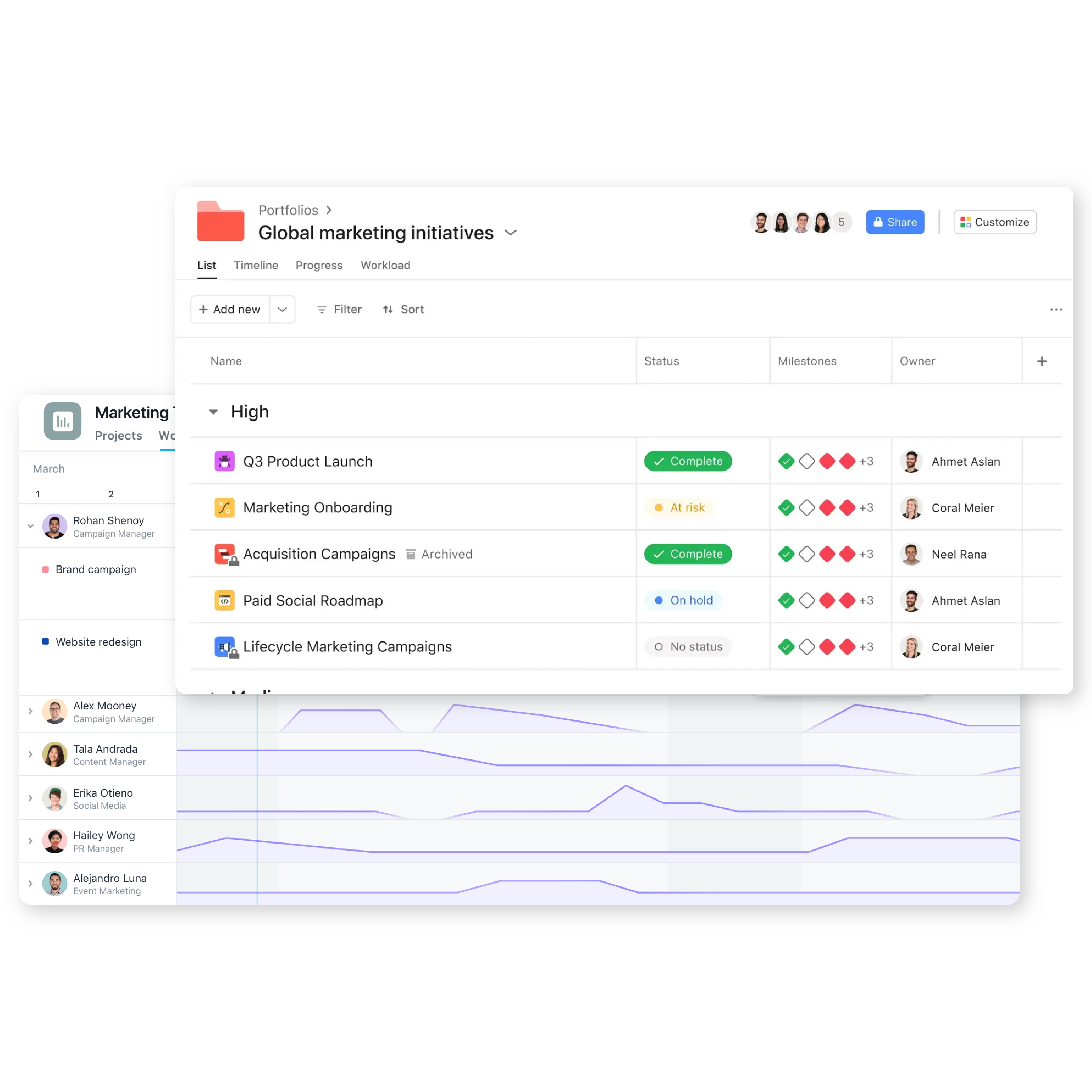
Goals → Portfolios → Projects → Tasks → Owners. Strategy is not just defined, but executed.
Is Your Organisation Managing Work —
or Managing Work About Work?
Core Capabilities

Task & Project Execution
- Clear ownership and deadlines
- Board, List, Timeline, Calendar views
- Structured project lifecycle management
- Standardised governance templates
Portfolio, Workload & Strategic Alignment
- Multi-project portfolio visibility
- Executive dashboards
- Workload balancing & capacity planning
- Real-time risk monitoring
- OKR & Goals alignment across teams
- Measurable initiative tracking


Automation & Workflow Orchestration
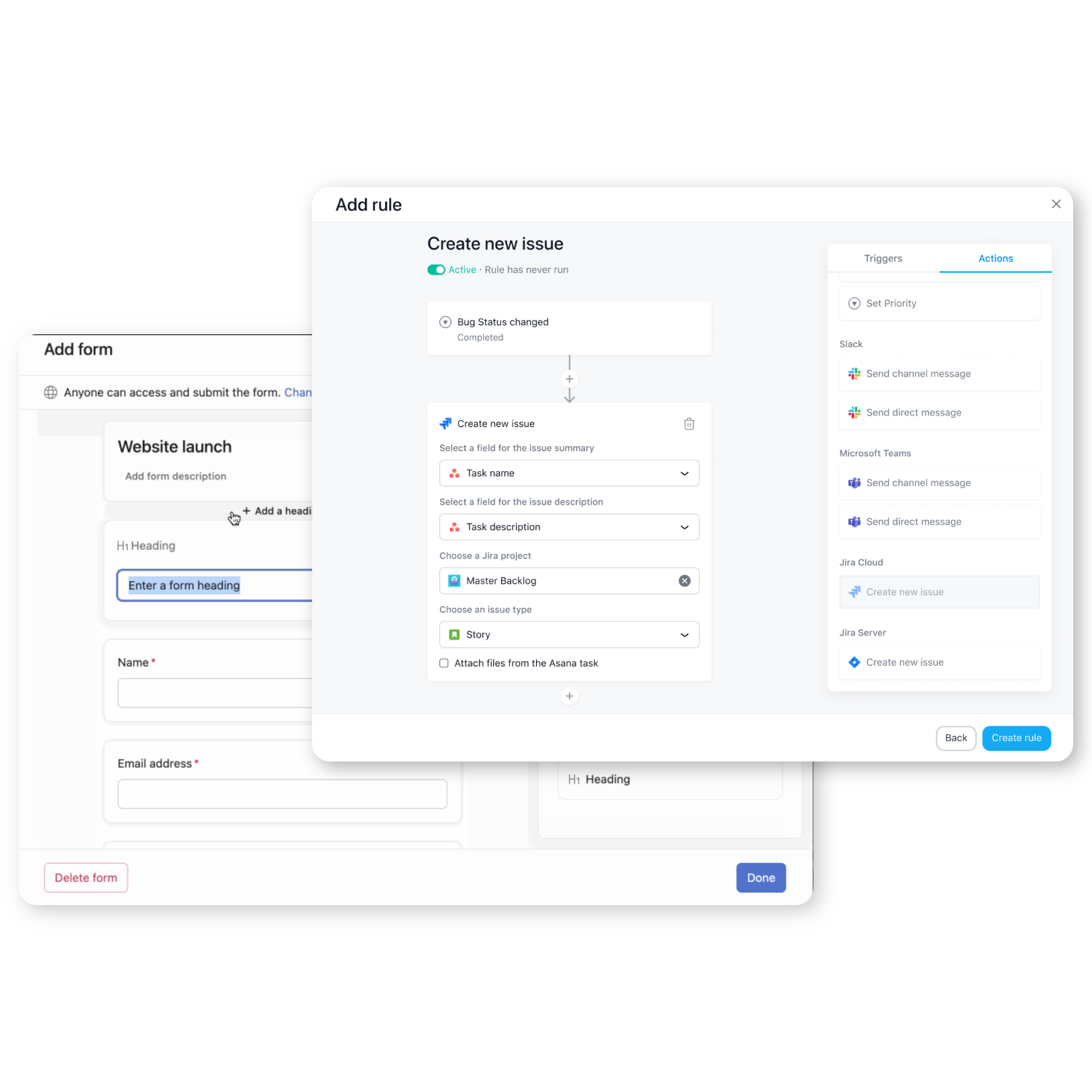
- Rules-based automation
- Forms that convert requests into tasks
- Reduced manual coordination
- API & cross-system integration
- AI workflow enablement
Enterprise Administration & Security
- Role-based permissions
- SSO & SCIM integration
- Enterprise Key Management
- Compliance-ready audit reporting

Enterprise Workflow Orchestration Layer
Asana as the Integration Backbone Across Enterprise Systems
In real-world enterprise environments, departments rarely operate on a single platform. Asana integrates across tools and systems to become the coordination layer that connects execution across the organisation.
Asana + Project & Engineering Tools (Jira / Trello / Monday / Notion)
Different teams may use different systems.
- Two-way Jira synchronisation of tasks and statuses
- Cross-platform project visibility
- Migration pathways from legacy tools
- Unified reporting across departments
Preserve specialised tools while establishing cross-functional governance.
Asana + Collaboration Platforms (Microsoft Teams / Slack / Google Chat)
Execution and communication must operate together.
- Automatic task notifications
- Converting messages into trackable tasks
- Maintaining discussion within project context
- Reducing meeting dependency
This reduces "work about work" overhead.
Asana + Generative AI (GPT / Claude / Internal AI Agents)
Asana acts as the operational execution layer for AI-driven workflows.
- Generate tasks from AI outputs
- Auto-create summaries and reports
- Convert AI insights into trackable initiatives
- Build semi-automated execution pipelines
AI becomes part of workflow, not just a chat interface.
Asana + ERP / CRM / Internal Systems (API / Webhooks / Zapier / Make)
Enterprise environments require system coordination.
- API and webhook integrations
- Cross-system automation via Zapier or Make
- CRM milestone tracking and ERP-linked reporting
- Automatic status updates and reporting workflows
Asana becomes the orchestration layer between core enterprise systems.
Case Study

iCHEF
iCHEF implemented structured project governance across R&D, customer support, and marketing functions to eliminate fragmented workflows and improve execution visibility.
Outcomes included:
- Standardised project lifecycle frameworks
- Clear accountability and ownership across departments
- Reduced reporting overhead through centralised dashboards
- Improved executive visibility into project status
- Enhanced operational coordination between technical and customer-facing teams
This governance model is directly applicable to Singapore organisations managing cross-functional teams in fast-scaling environments.

MamiLove
Mamie implemented Asana to establish a structured project management framework and improve internal operational consistency across teams. The organisation transitioned from informal coordination methods to a standardised governance model.
Outcomes included:
- Implementation of structured project management processes
- Standardised task ownership and execution tracking
- Reduced process ambiguity and duplicated efforts
- Improved cross-department workflow transparency
• Enhanced productivity through clearer operational alignment
This model is relevant to Singapore enterprises seeking to formalise internal processes while scaling workforce efficiency.

WEMO
Wemo leveraged Asana to manage multiple innovation initiatives simultaneously while maintaining strategic visibility at the leadership level. As the organisation scaled, structured governance became essential to sustain execution speed.
Outcomes included:
- Centralised oversight of multiple concurrent projects
- Improved portfolio-level visibility for leadership
- Faster decision-making through real-time dashboards
• Clear alignment between strategic initiatives and operational execution - Scalable governance structure to support continued growth
This approach is applicable to Singapore-based regional organisations managing innovation pipelines and expansion initiatives across Southeast Asia.
Asana Plans & Enterprise Governance Tiers in Singapore
Starter
For growing teams that need structured task execution
/ user / month, billed annually, US$ 13.49 billed monthly
- Unlimited tasks and projects
- Custom Fields
- List, Timeline, Gantt Chart, and Board Views
- Goals
- Approvals
- Portfolios and Workload
- Unlimited Automation Rules
- Workflow Builder (Standardized Workflows at Scale)
- Integrations with Salesforce, Tableau, and Power BI
- SAML/SCIM
- Guest Invite Permissions
Advanced
For organisations managing cross-functional initiatives
/ user / month, billed annually, US$ 30.49 billed monthly
- Unlimited Projects, Tasks, and Comments
- Custom Fields
- List, Timeline, Gantt Chart, and Board Views
- Goals
- Approvals
- Portfolios and Workload
- Unlimited Automation Rules
- Workflow Builder (Standardized Workflows at Scale)
- Integrations with Salesforce, Tableau, and Power BI
- SAML/SCIM
- Guest Invite Permissions
Enterprise
For Singapore Regional HQs & Regulated Organisations
- Unlimited Projects, Tasks, and Comments
- Custom
- List, Timeline, Gantt Chart, and Board Views
- Goals
- Approvals
- Portfolios and Workload
- Unlimited Automation Rules
- Workflow Builder (Standardized Workflows at Scale)
- Integrations with Salesforce, Tableau, and Power BI
- SAML/SCIM
- Guest Invite Permissions
Your Asana Partner in Singapore | Beyond Licensing, Built for Successful Adoption
The value of Asana goes beyond licensing. It comes from the right implementation strategy and continuous optimisation. As an Asana Solution Partner, Master Concept helps businesses plan, implement, integrate and optimise Asana, turning it into a central platform for managing work across teams.
Governance Architecture & Implementation Design
We begin with organisational structure, not software settings.
- Assess collaboration maturity and reporting workflows
- Design project and portfolio architecture
- Build standardised templates and governance models
- Establish scalable multi-project management systems
We ensure Asana aligns with executive oversight requirements from day one.
Regional Rollout & Change Management
For Singapore-based Regional HQs managing SEA teams:
- Design cross-market governance models
- Standardise reporting across countries
- Align OKR tracking across departments
- Support phased regional rollout strategies
Execution consistency across markets requires structured enablement.
Integration & Workflow Orchestration
Enterprise systems must work together. We design and implement:
- Asana-Jira synchronisation strategies
- Teams and Slack workflow integration
- API and automation via Zapier / Make
- AI workflow integration for acceleration
Asana becomes the orchestration layer across enterprise systems.
Enterprise Procurement & Billing (Singapore)
Enterprise SaaS procurement requires structured compliance:
- SGD quotations and local Pte Ltd invoicing
- GST-compliant billing
- Bank transfer payment options
- Procurement documentation support
Simplifies finance approval and reduces cross-border friction.
Training, Adoption & Executive Enablement
Tools fail when governance is not internalised:
- Executive-level governance workshops
- Project manager operational training
- Reporting and dashboard optimisation
- Ongoing optimisation advisory
Long-term adoption stability, not short-term activation.
Ongoing Optimisation & Strategic Advisory
As organisations evolve, governance must evolve too:
- SLA-based technical advisory
- Portfolio and reporting optimisation
- Governance maturity assessment
- Expansion planning for additional markets

Execution infrastructure scales with organisational growth.

Ready to build your
execution foundation?
Implementing enterprise work management is not about selecting the most feature-rich plan. It is about building a sustainable governance architecture. Master Concept helps Singapore organisations operationalise Asana as a long-term execution foundation.
Book a ConsultationFrequently Asked Questions (FAQ)
Is Asana suitable for Regional HQ management in Singapore? Yes. Asana is widely used by Singapore-based regional headquarters managing So
Yes. Asana is a preferred choice for Singapore-based regional headquarters overseeing Southeast Asia. Its Portfolio and Goals features allow leadership to:
Track initiatives across multiple countries from a single dashboard.
Align OKRs (Objectives and Key Results) from HQ down to local execution teams.
Monitor project health in real-time to catch delays before they escalate.
Reduce manual reporting by automating status updates.
How does Asana help reduce “work about work” in Singapore teams?
Singaporean organizations often struggle with excessive status meetings and manual coordination. Asana solves this by:
Centralizing tasks, ownership, and deadlines into a single source of truth.
Providing instant clarity on who is doing what by when.
Reducing the dependency on long email chains and update meetings.
Can we receive SGD quotations and GST-compliant invoices?
Yes. By working through a Singapore-based partner, your organization can access:
Quotations issued in Singapore Dollars (SGD).
Invoicing from a local Pte Ltd entity.
Fully GST-compliant billing for tax recovery.
Flexible payment options, including local bank transfers.
Is Asana compliant with Singapore’s security requirements?
Absolutely. Asana meets the rigorous standards required by financial services and government-linked organizations, including:
Certifications: SOC 2 Type II and ISO 27001.
Control: Enterprise Key Management (EKM).
Access: SSO (Single Sign-On) and SCIM provisioning.
Transparency: Full audit logs and granular role-based permissions.
How does Asana compare to Monday.com in the local market?
Asana is typically chosen by organisations requiring structured portfolio governance, strategic alignment, and cross-market visibility. Monday.com is often preferred for highly visual team-level workflows, while Asana is stronger in enterprise governance and OKR alignment.
Does Asana integrate with Microsoft 365 and Jira?
Yes. Asana acts as a connective layer for your existing tech stack:
Productivity: Seamless integration with Microsoft Teams, Outlook, and Google Workspace.
Technical Teams: Two-way sync with Jira.
Communication: Deep integration with Slack.
Customization: Connection to ERP and CRM systems via a robust API.
Is Asana suitable for regulated industries (Healthcare/Finance)?
Yes. Because of its enterprise-grade security controls and structured governance, it is widely used in compliance-sensitive sectors that require high levels of data integrity and oversight.
Is Asana eligible for the PSG (Productivity Solutions Grant)?
Grant eligibility is subject to current IMDA listings and approved vendor status. We recommend checking the official Business Grants Portal or consulting with a local partner to verify the latest PSG status.
What is the typical implementation timeline in Singapore?
Timelines vary based on the size of the rollout:
Basic Governance Setup: 2–4 weeks.
Regional Rollout & Integrations: 4–8 weeks.
Professional onboarding ensures higher adoption rates and long-term stability.
Why buy through a Singapore partner instead of directly?
Local partners bridge the gap between software and local business reality. Benefits include:
Procurement Alignment: Handling local invoicing and documentation.
Advisory: Expert implementation and governance strategy.
Support: On-the-ground help that goes beyond simple license activation.