


Did you know that fuel is the single largest variable operating expense for commercial fleets—second only to labor? In fact, fuel accounts for 20% to 40% of total fleet budgets. Yet, while most fleet managers know fuel is a massive cost sinkhole, very few can pinpoint where every liter actually goes. Managing fuel expenses based on gut feeling and a stack of monthly gas receipts simply doesn’t cut it anymore.
In this guide, we’ll uncover the 4 hidden causes of fuel waste, share 8 proven strategies to lower fuel costs, and show you how modern telematics turns guesswork into precise cost control.
4 Unseen Causes of Fleet Fuel Waste
Before jumping into solutions, we need to answer a basic question: Where is your fuel actually being lost? Without identifying these hidden leaks, cost-cutting efforts are just shots in the dark.
1. Risky Driving Behavior
A driver’s foot on the gas pedal has the single biggest impact on fuel efficiency. Aggressive habits—like sudden acceleration, hard braking, tailgating, and high-speed cruising—keep the engine under constant heavy load. Research shows that aggressive driving alone can alter fuel consumption by up to 30% between drivers operating the exact same vehicle model. [1]
2. Excessive Engine Idling
Leaving a truck running during rest breaks, keeping the AC on while parked, or sitting in long loading dock queues wastes an incredible amount of fuel. A heavy commercial truck burns approximately 1.5 to 4 liters of fuel per hour just sitting idle. On top of burning cash, excessive idling accelerates engine carbon buildup and degrades engine oil faster.
3. Inefficient Route Planning
Driving without pre-optimized routes leads to unnecessary detours, traffic bottlenecks, and frequent stop-and-go driving. City congestion wears down brakes and transmissions far faster than highway driving. Without clear routing, every extra mile driven is money pulled straight out of your operating budget.
4. Poor Vehicle Maintenance
Clogged air filters, worn spark plugs, expired engine oil, dragging brake pads, and underinflated tires all add rolling resistance. Without routine preventive maintenance, engines operate under continuous strain, drastically reducing overall fuel efficiency.
Why “Managing by Gut Feeling” Hits a Dead End
Many operations managers still rely on a pile of gas station receipts at the end of the month to evaluate their fleet fuel tracking. In modern logistics, this outdated approach creates serious management blind spots:
- Delayed Data: By the time monthly fuel receipts land on your desk, the fuel is already burned and the financial loss is irreversible.
- Zero Context: Paper receipts show how much was spent, but fail to explain why a fuel spike happened. Was it due to heavy cargo, severe traffic gridlock, or hours of idling with the AC running?
- Subjective Reviews: Without objective telemetry, establishing fair driver incentives is impossible. For example, penalizing a driver for high fuel burn on a mountainous route compared to a flat highway run creates frustration across your team.
8 Proven Strategies to Lower Fleet Fuel Costs
Tackling high fuel expenses requires a coordinated strategy covering driver behavior, route planning, and vehicle health. Here are 8 proven methods top commercial fleets use to cut fuel spend:
1. Coach Driver Habits in Real Time
Improving driver behavior delivers the fastest return on investment. Defensive driving workshops teach core techniques—like maintaining safe following distances to avoid hard braking, accelerating smoothly, and coasting to leverage vehicle momentum.
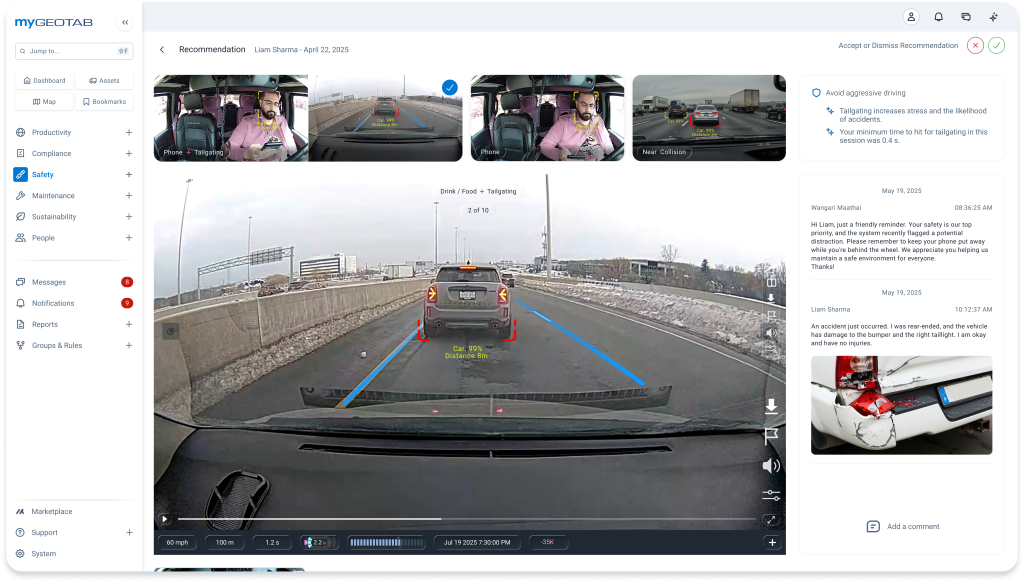
However, classroom training alone won’t change daily habits on the road. Implementing advanced tools like the Geotab GO Focus Plus AI dashcam bridges the gap. By pairing ADAS (Advanced Driver Assistance System) and DMS (Driver Monitoring System), it issues immediate voice alerts whenever drivers speed, accelerate aggressively, or drive distracted. Linking event video with telemetry gives managers concrete data to coach better habits.
2. Enforce Anti-Idling Policies
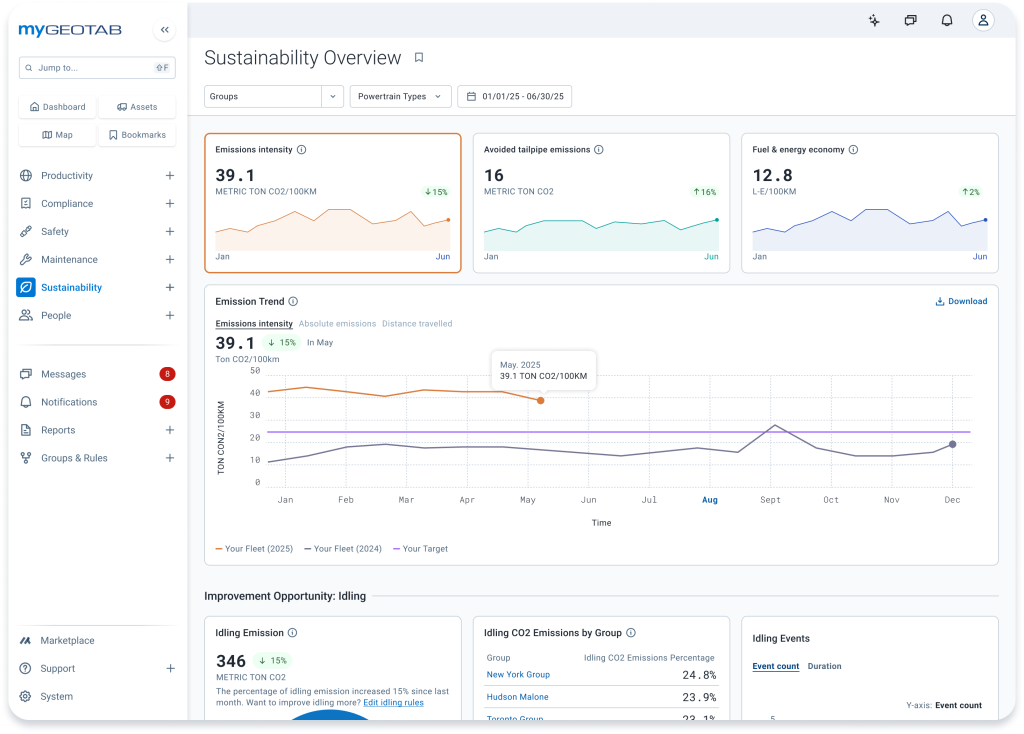
Establishing a strict anti-idling policy can cut total fuel spend by 5% to 11% almost overnight. Modern telematics platforms track exact idling duration, location, and wasted fuel costs, sending automated notifications whenever a vehicle idles past set thresholds.
3. Optimize Multi-Stop Routes
Cutting unnecessary mileage is the fastest path to lower fuel burn. Using AI route optimization tools like Master Planner allows dispatchers to organize multi-stop paths for thousands of vehicles in minutes. The software automatically routes around construction zones, traffic jams, and detours to maximize fuel efficiency.

4. Automate Preventive Maintenance
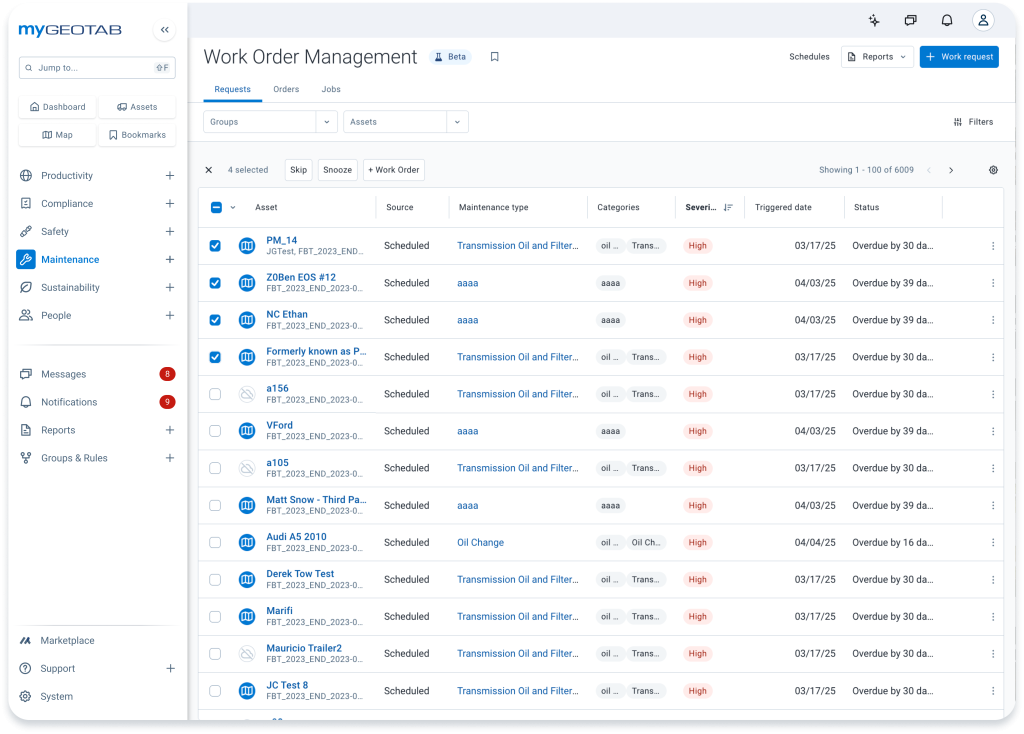
Don’t wait for a breakdown before visiting the repair shop. Plugging telematics devices like the Geotab GO9 into your vehicles’ diagnostic ports allows you to monitor engine hours, mileage, and fault codes continuously. Automated maintenance alerts catch minor engine issues before they turn into major fuel hogs.
5. Control Cargo Weight and AC Usage
Excess cargo weight requires more engine power to accelerate. Fleet teams should routinely clear unnecessary equipment, junk, and old spare parts out of cargo holds. Additionally, encouraging drivers to use natural ventilation at low city speeds and keeping windows closed on high-speed highways reduces aerodynamic drag.
6. Match Vehicle Capacity to the Job
Deploying an oversized heavy truck to deliver a light parcel wastes fuel. Aligning vehicle engine displacement and cargo capacity with actual delivery loads ensures high efficiency. Using smart dispatching tools help route the right vehicle class for every specific job.
7. Maintain Correct Tire Pressure
According to the U.S. Department of Energy, every 1 PSI drop in tire pressure below recommended levels reduces overall fuel efficiency by roughly 0.2%. [2] Underinflated tires also run hotter, increasing blowout risks. Performing regular driver vehicle inspection reports (DVIR) ensures tires stay within optimal factory pressure ranges.
8. Implement Data Monitoring & Driver Rewards
Tactics work best when supported by long-term tracking. Connecting a fuel monitoring system to driver safety scorecards transforms passive rules into active driver engagement. Rewarding top eco-drivers builds a healthy company culture focused on fuel savings.
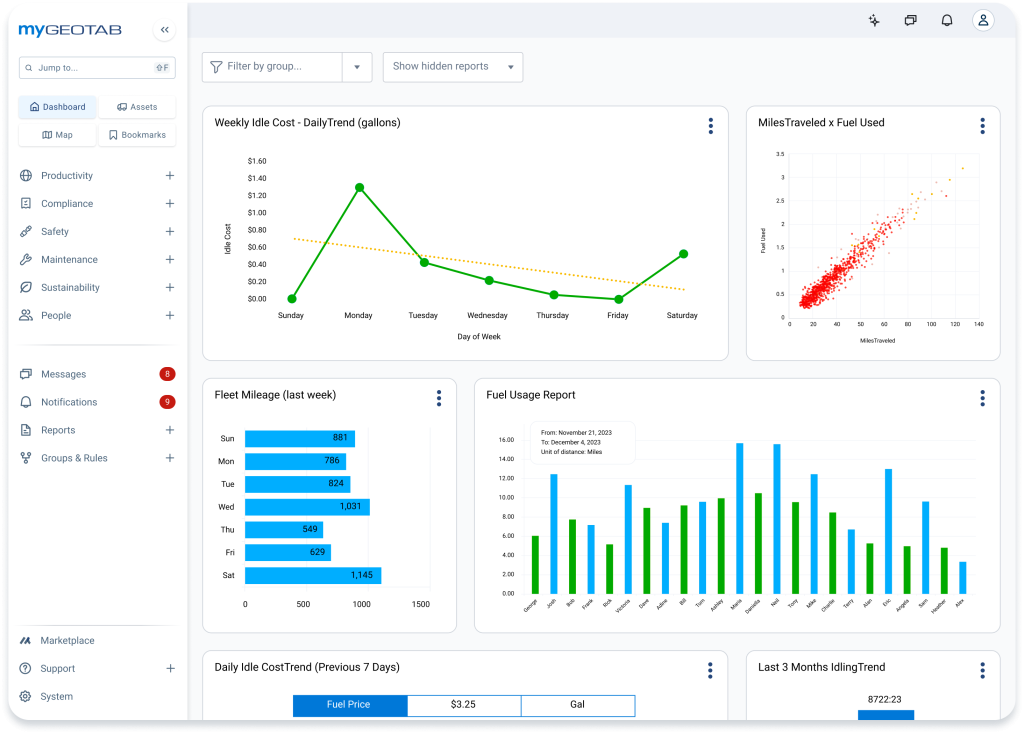
Geotab‘s visual dashboards deliver your mileage, fuel usage, idle costs, and trends at a glance—turning fleet data into actionable insights.
How to Take Complete Control of Fleet Fuel Management
To achieve long-term operational efficiency, fleet leaders rely on a simple principle: “You can’t manage what you don’t measure.“
Manual spreadsheets, paper receipts, and hand-copied odometer logs hit the ceiling very quickly. Manual tracking fails to connect fuel burn with real-world driving contexts and drains valuable admin hours.
Telematics: The Engine Behind Modern Fuel Control
Plugging a telematics device into a vehicle’s OBD-II port reads engine ECU data in real time, unlocking complete visibility:
1. Real-Time Consumption Tracking
Captures exact fuel consumption per trip and per acceleration event. Cross-referencing telemetry with fuel card transaction data flags discrepancies between fuel purchased and fuel added to the tank, instantly stopping fuel theft.
2. Correlating Habits with Fuel Burn
Overlays hard braking, speeding, and idling logs over fuel consumption curves shows fleet managers the exact root causes of fuel spikes.
3. Integrating AI Video for Safety and Savings
Pairs telematics data with the AI dashcam links sudden fuel spikes to distracted driving or sudden braking events, giving managers visual context to resolve safety and efficiency risks simultaneously.
Geotab: Fuel Tracking for Efficiency and Sustainability
Effective fleet fuel management extends far beyond basic expense tracking—it directly impacts both your operational efficiency and environmental goals.
By deploying world-class telematics Geotab, commercial fleets gain a unified system to cut operating costs, improve vehicle health, and meet ESG standards simultaneously:
- Geotab GO9 Device: Connects directly to the vehicle’s OBD-II port to pull real-time engine diagnostics, precise fuel consumption data, and greenhouse gas (GHG) emissions straight from the ECU. This allows fleet managers to spot engine fault codes early, eliminate fuel theft by cross-referencing fuel cards, and generate verified data for carbon accounting.
- Geotab GO Focus Plus: Combines AI-powered dashcam video with driving telemetry to curb wasteful habits. By delivering real-time voice alerts for hard braking, speeding, and distracted driving, it prevents excessive fuel burn, cuts carbon emissions, and lowers overall accident risks in a single stroke.
Maximize Your Fuel Savings with Master Concept
Lowering fleet fuel costs starts with understanding where fuel is lost, but long-term savings require automated tracking. When driver habits, idling, routing, and vehicle health are monitored on a unified platform, fuel management shifts from reactive checking into proactive tracking.
As a trusted Google Maps Platform and Geotab partner across APAC, Master Concept brings enterprise-grade fleet tracking solutions to commercial operators. By combining Geotab telematics with Master Planner, we help fleets eliminate idle time, coach better driver habits, and slash daily operating costs.
Ready to optimize your fuel spend and boost fleet performance? Reach out to our team today for a fleet evaluation and personalized demo!
Frequently Asked Questions (FAQs)
How do I cut fuel costs for my fleet?
Start by tackling the major causes of fuel waste: driver behavior, engine idling, and bad routing. Using telematics tools to coach drivers, setting strict anti-idling policies, and deploying AI route optimization to shorten total delivery miles can cut overall fleet fuel spend significantly.
What is the biggest cause of high fuel consumption in fleets?
The driver’s foot on the gas pedal has the largest single impact on fuel burn. Aggressive driving—such as sudden acceleration, hard braking, speeding, and tailgating—can alter fuel economy by up to 30% between drivers operating the exact same vehicle model.
How much fuel does a truck waste while idling?
A heavy commercial truck burns approximately 1.5 to 4 liters (0.4 to 1 gallon) of fuel per hour just sitting idle. On top of burning expensive fuel, excessive engine idling causes carbon buildup, degrades engine oil faster, and increases maintenance frequency.
How does route optimization help save fuel?
Route optimization software like Master Planner uses smart algorithms to calculate the shortest, most efficient path for drivers across multiple stops. By avoiding heavy traffic, preventing overlapping driver routes, and cutting unnecessary detours, fleets can complete more stops while driving fewer miles to burn less fuel.
How do I track and detect fleet fuel theft or card abuse?
You can prevent fuel theft by integrating vehicle telematics directly with your fuel cards. Cross-referencing actual fuel volume added to the tank with card swipe data in real time allows fleet management software to automatically flag discrepancies and block unauthorized transactions.
What is the best telematics or fleet tracking system to reduce fuel costs?
Look for an enterprise telematics system that connects directly to your vehicles’ diagnostic ports (OBD-II) rather than simple phone-based GPS apps. To maximize savings, choose a system that combines:
- Direct Engine Data: Tracks exact fuel burn, engine idling duration, and automated maintenance alerts.
- AI Driver Coaching: Delivers real-time in-cab audio alerts for dangerous habits—such as phone usage, fatigue, and distraction—as well as driving events like speeding, hard braking, and tailgating.
- Fuel Card Integration: Automatically cross-references receipts with actual tank levels to spot discrepancies and eliminate fuel theft.
- Smart Route Optimization: Pairs real-time vehicle telemetry with dynamic route planning to cut overall fleet mileage.
Top global telematics like Geotab bring these features together into a unified platform—helping commercial fleets eliminate wasteful driving and achieve maximum fuel efficiency through visual dashboards and reporting.
Reference:
- FuelEconomy.gov – Driving More Efficiently
- U.S. Department of Energy – Fuel Economy Tips


![[Free Webinar] Road to COP17: Unifying Enterprise Data with Planetary-Scale Geospatial AI](https://masterconcept.ai/wp-content/uploads/2026/09/Webinar-261007-Unifying-Enterprise-Data-with-Planetary-Scale-Geospatial-AI-_1280x720px-scaled.png)